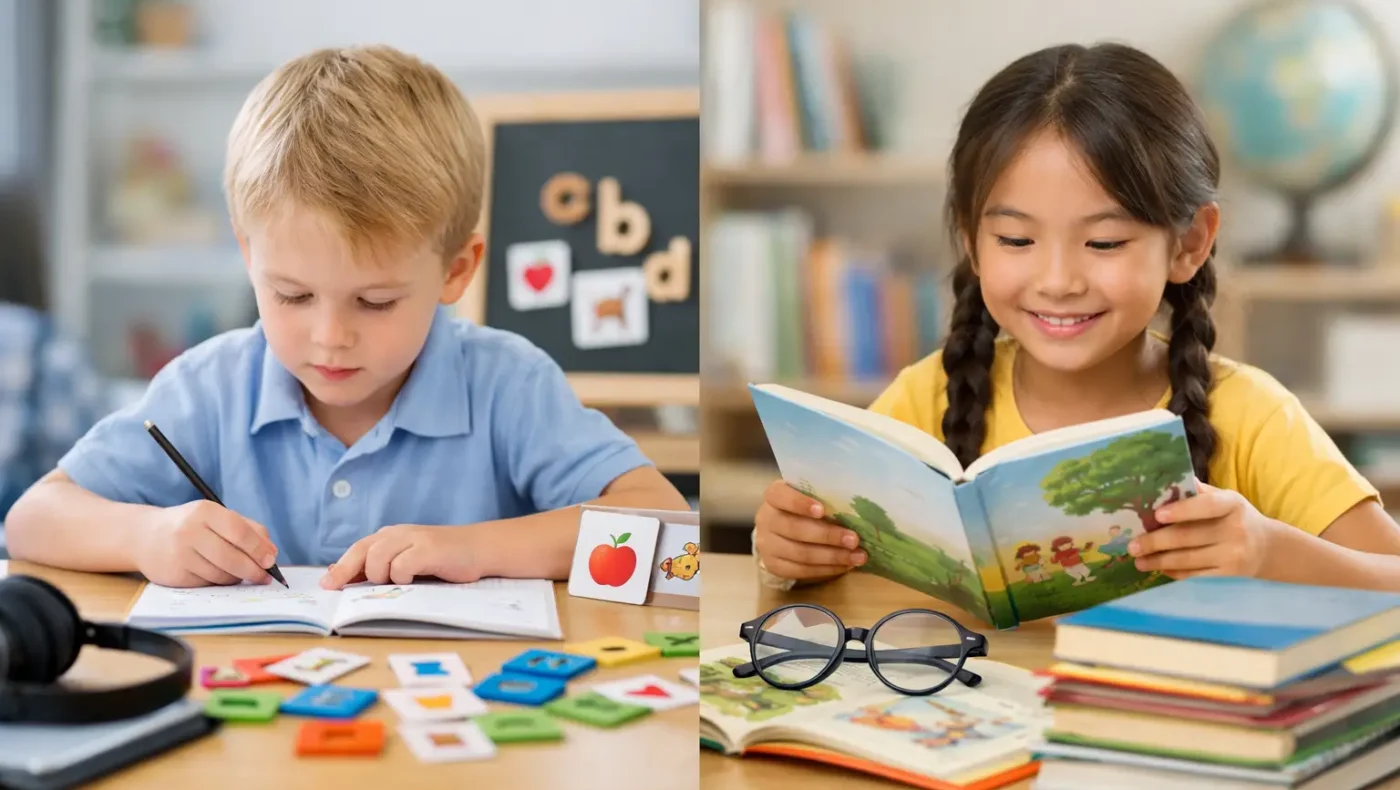
What Is Executive Functioning in Children?

What Is Executive Functioning in Children?

A child understands the worksheet, knows the answer, and still cannot get started. Another revises for hours but remembers very little in the exam. A third melts down over a small change in routine, even though everyone knows they are bright. If you have seen this at home, you may have asked, what is executive functioning, and why does it seem to affect school so deeply?

Executive functioning refers to the set of mental skills that help a child manage attention, control impulses, hold information in mind, plan steps, switch between tasks, and follow through. These are the brain-based skills behind organised learning. In simple terms, executive function is what helps a student do what they know, not just know what to do.

What is executive functioning and why does it matter?

For parents, executive functioning often shows up in everyday frustrations. Homework takes too long. Instructions need repeating. Bags are packed in a rush. Revision starts late. Careless mistakes appear in work that your child is fully capable of doing well.

This is why executive functioning matters so much. Academic success is not only about intelligence or content knowledge. A child may understand fractions, comprehension techniques, or science concepts, but still struggle to apply them consistently if they cannot focus, plan, remember instructions, or regulate emotions under pressure.

These skills affect far more than grades. They shape independence, confidence, resilience, and the ability to cope with increasing demands as children move from preschool to primary school and then into secondary education. In Singapore’s highly structured school environment, where expectations build quickly, weak executive skills can make a capable child appear less prepared than they really are.

The core skills behind executive functioning

Executive functioning is not one single ability. It is a group of connected skills working together.

Working memory

Working memory allows a child to hold and use information in the moment. It is what helps them remember a teacher’s instruction while completing the task, keep track of multi-step maths workings, or retain key points while reading a passage.

When working memory is weak, children often lose track halfway through. They may know the method, but forget the next step. They may read a paragraph, then realise they cannot recall what it said.

Inhibitory control

This is the ability to pause before acting, resist distractions, and think before responding. In the classroom, inhibitory control helps a student stay seated, wait their turn, and avoid rushing into careless errors.

At home, it may look like starting homework without wandering off every few minutes, or managing frustration without an immediate emotional outburst.

Cognitive flexibility

Cognitive flexibility helps a child shift between ideas, adapt to change, and recover when something does not go as planned. This matters when a question is asked in an unfamiliar way, when a student must move from one subject to another, or when they need to try a different approach after getting stuck.

Children with strong cognitive flexibility are often better at problem-solving. Those with weaker flexibility may become rigid, anxious, or easily overwhelmed by small changes.

Planning and organisation

These skills help children break tasks into steps, estimate time, prioritise, and keep track of materials. They become increasingly important as students grow older and face more independent work.

A child who struggles here may leave revision until the last minute, forget worksheets, or spend a long time working without making real progress.

Emotional regulation and self-monitoring

Executive functioning also includes the ability to notice one’s own performance, adjust behaviour, and manage emotions. This is especially important during tests, oral presentations, and high-pressure school situations.

A student might know the content well, but if stress takes over, performance drops. That is not laziness. Often, it is a regulation issue.

What executive functioning looks like at different ages

Executive skills do not appear fully formed. They develop gradually over childhood and adolescence.

In preschool years, executive functioning is seen in simple behaviours such as taking turns, following short instructions, moving from play to task time, and controlling impulses. A young child who cannot yet do these things consistently is not necessarily behind. Development at this stage varies greatly.

In primary school, the expectations rise. Children need to manage homework, listen for longer periods, complete more complex tasks, and recover from mistakes without shutting down. This is often when executive weaknesses become more visible, especially in bright children whose early academic ability once masked the problem.

By secondary school, executive function becomes central to performance. Students must revise independently, manage competing deadlines, track subject demands, and sustain attention for longer periods. If these skills are underdeveloped, stress tends to increase quickly.

That is why early support matters. Waiting until exam years can make the gap feel much harder to close.

Signs a child may be struggling with executive functioning

Parents often assume a child is careless, lazy, or unmotivated when the real issue is that the brain’s management system is under strain.

Some common signs include frequent forgetfulness, trouble starting tasks, poor time awareness, unfinished work, emotional overreactions, messy work despite strong understanding, and an obvious mismatch between ability and actual performance. You may also notice that your child does well in one-to-one support but struggles to work independently.

There is a trade-off here, though. Not every child who forgets homework has an executive function problem, and not every active child has poor self-control. Fatigue, anxiety, sleep issues, learning differences, and even overscheduling can all affect these behaviours. Context matters.

Can executive functioning be improved?

Yes, in many cases it can. Executive skills are teachable, trainable, and responsive to the right support. But improvement is rarely instant, and it usually does not come from telling a child to “try harder” or “be more responsible”.

Children improve when these skills are made visible, practised regularly, and reinforced in a structured way. For example, planning improves when a child is taught how to break a task into smaller parts. Working memory improves when information is chunked and rehearsed. Focus improves when distraction is reduced and attention is trained gradually.

The key is that support must be specific. Generic tuition may help content knowledge, but it does not always address the cognitive processes that drive consistent learning. A child may memorise more facts and still remain disorganised, distracted, or easily overwhelmed.

How parents can support executive function at home

The most helpful approach is calm structure. Children develop these skills best when expectations are clear, routines are predictable, and adults model the habits they want to see.

Simple strategies can make a real difference. Use short, direct instructions instead of long explanations. Create visual routines for homework and school preparation. Break larger tasks into smaller actions. Build in pauses rather than forcing long periods of unbroken study. Ask questions such as “What is your first step?” rather than giving the full answer immediately.

It also helps to look beyond behaviour and ask what skill is missing. If your child keeps avoiding homework, are they distracted, overwhelmed, unsure how to begin, or afraid of getting it wrong? Different causes require different support.

Praise should also be targeted. Instead of only saying “Well done”, notice the process. “You checked your work carefully.” “You kept going even when it was tricky.” “You packed your bag without reminders.” This teaches children to value strategies, not just outcomes.

Why executive functioning is closely linked to academic results

Parents are often told to focus on subject content, and of course content matters. But children do not use knowledge in a vacuum. They need the mental systems to retrieve it, apply it, and manage themselves while doing so.

That is why executive functioning has such a strong effect on school outcomes. It influences how efficiently a child learns, how well they cope with challenge, and whether they can perform under timed conditions. When these skills strengthen, children often become more confident because success feels repeatable, not accidental.

At ILLAC, this is one reason executive skills are treated as part of learning itself, not as an optional extra. When focus, memory, planning, and self-management improve, academic progress tends to become faster, deeper, and less stressful.

A child does not need to be naturally organised, naturally calm, or naturally independent to thrive. Often, they need the right guidance, consistent practice, and adults who can see the skill behind the struggle. That shift in understanding can change not only school performance, but the way a child sees themselves.

How gep preparation classes should work

How gep preparation classes should work

A child who finishes a difficult problem with a grin instead of tears is usually showing you something more important than raw ability. They are showing readiness. That is why gep preparation classes should never be treated as a stack of extra worksheets or a race to memorise question types. For most families in Singapore, the real challenge is not whether a child can work harder. It is whether they can think clearly, stay focused under pressure and enjoy tackling unfamiliar questions.

The Gifted Education Programme selection process tends to reward more than strong school results. Children are often asked to spot patterns quickly, make sense of unusual language, and handle unfamiliar tasks without panicking. That can catch even high-performing pupils off guard. A child who usually scores well in school may still struggle if they are used to routine practice but not flexible thinking.

What good gep preparation classes actually build

The best gep preparation classes strengthen the underlying skills that selective assessments tend to reveal. Yes, academic exposure matters. A wider vocabulary, sharper mathematical reasoning and stronger reading comprehension all help. But these are only part of the picture.

Children also need executive function skills. They need working memory to hold several pieces of information at once. They need attention control so they do not lose the thread halfway through a multi-step task. They need cognitive flexibility so they can switch strategies when the obvious approach fails. They need confidence, because hesitation wastes time and mental energy.

This is where many traditional tuition models fall short. If a programme focuses only on drilling mock papers, children may become familiar with a format without becoming better thinkers. That can produce short-term comfort, but it does not always produce the composure or reasoning depth needed when a question looks unfamiliar.

Why some bright children still struggle with GEP-style assessments

Parents often assume that a child who reads early or scores well in school will naturally do well in gifted selection tests. Sometimes that happens. Sometimes it does not. The difference often comes down to how the child processes information.

Some children know a lot but rush. They miss key words, make careless assumptions and lose marks on tasks they were fully capable of solving. Others think well but slowly, especially when they feel watched or timed. Some freeze when a question does not resemble anything they have seen before. None of this means the child lacks potential. It means the child may need targeted support in focus, accuracy and flexible reasoning.

That is why parents should be careful about programmes that promise easy shortcuts. There is no magic worksheet that turns a child into a deep thinker in a few weeks. Strong preparation is more developmental than cosmetic. It helps children become calmer, sharper and more independent over time.

What to look for in gep preparation classes

A serious programme should balance challenge with support. If classes are too easy, children become overconfident without growing. If classes are too hard, they become discouraged and start associating advanced learning with stress. The right level stretches thinking while still allowing the child to experience progress.

Look closely at teaching style. Small-group teaching is often more effective than large lecture-style lessons because the tutor can observe how a child is thinking, not just whether the final answer is correct. That matters in GEP preparation. A child may arrive at the wrong answer for very different reasons – weak vocabulary, poor inference, low stamina or careless reading. Good teachers diagnose the gap before trying to fix it.

It also helps when classes include explicit training in thinking habits. For example, children should learn how to slow down and scan a problem properly, how to eliminate poor options, how to test a pattern before committing to it, and how to recover when stuck. These are teachable skills. They are often the difference between a child who says, “I don’t know” and a child who says, “Let me try another way”.

The case for brain-based preparation, not rote learning

For younger learners especially, engagement matters. Children learn better when lessons are interactive, mentally stimulating and designed to hold attention. Sensory activities, memory tasks, verbal reasoning games and structured problem-solving discussions can all be more effective than repetitive drilling when used well.

This does not mean preparation should feel like play all the time. Children still need discipline, consistency and exposure to challenge. But challenge lands differently when the brain is alert and emotionally settled. A child who feels safe enough to think aloud, make mistakes and try again usually develops stronger reasoning than a child who is constantly worried about getting everything right immediately.

That is one reason many parents are moving away from pure cramming. They want results, but they also want their children to become stronger learners. A preparation class should improve more than test familiarity. It should improve how a child reads, reasons, remembers and responds to pressure.

When should parents start GEP preparation?

It depends on the child. Starting too late can lead to panic preparation, which rarely works well. Starting too early with an excessively intense programme can also backfire, especially if a child begins to feel labelled or burdened.

In most cases, the best time to start is when a child is ready to engage with higher-order thinking in a steady, age-appropriate way. That usually means building advanced comprehension, vocabulary and reasoning habits before the assessment year becomes stressful. Preparation works better when it is woven into normal learning rather than treated as an emergency fix.

Parents should also watch for readiness signals. Does your child enjoy tackling tricky questions? Can they sustain attention for longer tasks? Do they recover well when they get something wrong? These signs matter. A child does not need to be perfect. They do need enough emotional and cognitive maturity to benefit from challenge.

How parents can support progress at home

Home support matters, but it should not turn family life into another test room. The most helpful parents create a culture of curiosity. They ask children how they arrived at an answer. They encourage reading beyond school texts. They normalise effort and help children see mistakes as information, not failure.

It also helps to protect sleep, routine and emotional stability. Tired children do not reason at their best. Over-scheduled children may become irritable and mentally flat. If your child is in gep preparation classes, their timetable still needs room for rest and ordinary childhood. Strong performance grows better in a regulated child than in an exhausted one.

Be cautious with pressure. Children often absorb parental anxiety very quickly. If every practice session feels loaded with expectations, some children become fearful and others switch off. Aim for steady encouragement. Praise persistence, careful thinking and improvement, not just high scores.

A better standard for gep preparation classes

Parents are right to want strong outcomes. GEP preparation is a serious investment of time, money and trust. But the standard should be higher than paper practice alone. Effective classes should strengthen academic reasoning, yes, but also concentration, working memory, resilience and confidence.

This is where a more integrated model makes sense. A programme that combines subject knowledge with executive function training gives children a stronger foundation for selective assessments and for school life after them. It prepares them not only to answer harder questions, but to become the kind of learner who can handle complexity with confidence. At ILLAC Singapore, that belief shapes how advanced learners are taught – not by pushing them to memorise more, but by helping them think better.

For parents comparing options in places such as Jurong East, Woodlands or Clementi, the key question is simple. Will this class merely coach my child for a test, or will it help my child grow into a sharper, calmer and more capable learner?

That distinction matters. The best preparation does not just raise the chance of selection. It gives children tools they will keep using long after the test paper is gone.

How to Improve Exam Stamina for Students

How to Improve Exam Stamina for Students

The warning signs usually appear before the exam itself. A child starts strong with revision, then fades after twenty minutes. A practice paper begins well, but the last section is rushed, messy, or left incomplete. By the time the real paper arrives, the issue is not always content knowledge. Often, it is endurance. If you are wondering how to improve exam stamina, the goal is not to push children to work endlessly. It is to train the brain and body to sustain focus, accuracy, and calm for the full length of the paper.

For many parents, this is a frustrating problem because it can look like carelessness or poor motivation. In reality, stamina is a trainable skill. Just as athletes build endurance progressively, students can build mental endurance through the right routines, cognitive habits, and exam practice. The key is to stop treating concentration as something children should simply have, and start developing it deliberately.

Why exam stamina matters more than many parents realise

A student can understand the topic and still underperform if their energy drops halfway through a paper. This is especially common in upper primary and secondary years, where papers are longer, questions are more demanding, and sustained thinking matters as much as recall.

Exam stamina affects more than speed. It influences working memory, attention to detail, decision-making, and emotional control. When mental energy dips, children are more likely to misread instructions, skip steps, panic over difficult questions, or make avoidable mistakes in the final third of the paper. That is why some students score much lower in formal assessments than they do in short worksheets or oral revision sessions.

There is also a confidence issue. A child who repeatedly runs out of steam begins to associate exams with frustration. Over time, they may tell themselves they are “bad at exams” when the real problem is that they have never been shown how to pace their attention.

How to improve exam stamina without relying on cramming

The first step is to understand that stamina does not come from doing more and more work in one sitting. In fact, that approach often backfires. If a child is constantly pushed into long, unstructured revision blocks, they may become mentally resistant before they become stronger.

A better method is progressive training. Start from the child’s current focus capacity, then extend it gradually. If your child can work effectively for twenty-five minutes before quality drops, that is your baseline. From there, you increase the demand in small, manageable steps while preserving accuracy.

This matters because stamina is built through success under slightly greater challenge, not through repeated overwhelm.

Build longer focus in stages

One of the most effective ways to improve endurance is to use timed study blocks that reflect the child’s current ability. A younger pupil might begin with twenty minutes of focused work followed by a short break. An older student preparing for major exams may build towards forty-five to sixty-minute blocks.

The important part is consistency. Two or three well-structured sessions each week will do more for stamina than one exhausting revision marathon on a Sunday. Over several weeks, the brain begins to adapt to longer periods of sustained effort.

Parents should also watch for the quality of work, not just whether the child stays seated. A full hour of distracted studying is not stamina training. It is just time passing.

Train in exam conditions, not only homework conditions

Many students revise in comfortable, informal ways and are then surprised by how draining a real exam feels. Homework allows for movement, reminders, pauses, and sometimes help from adults. Exams do not.

That is why children need practice that mirrors the demands of the real setting. This includes timed papers, limited interruptions, no immediate coaching, and the expectation of completing every section within a fixed window.

If a student only ever practises individual questions, they may build knowledge but not endurance. Full-paper practice teaches pacing, recovery after difficult questions, and the discipline of maintaining performance when tired. That is where stamina begins to become visible.

Daily habits that support mental endurance

Strong exam stamina is not built only at the desk. It is shaped by sleep, routine, nutrition, and emotional regulation. These areas can sound basic, but they have a direct effect on cognitive performance.

Sleep is part of exam preparation

Tired children do not just yawn more. They process information less efficiently, lose concentration faster, and struggle to regulate frustration. If a student is sleeping too late, waking inconsistently, or relying on last-minute revision at the expense of rest, stamina will suffer.

A regular sleep schedule in the weeks before an exam matters more than one early night before the paper. The brain performs best when its rhythm is stable.

Food and hydration affect staying power

Children do not need elaborate brain foods, but they do need steady energy. Going into revision or an exam hungry, dehydrated, or loaded with sugary snacks can lead to uneven concentration. A balanced meal beforehand and good hydration across the day can make focus more stable.

This is especially relevant for morning papers. Some students appear anxious when they are actually under-fuelled and mentally flat.

Movement helps attention last longer

Physical activity improves blood flow, alertness, and mood regulation. A child who has no movement in the day often finds it harder to settle into sustained cognitive work. This does not mean intense sport is required. Even a short walk, stretching, or light play before revision can help the brain shift into a more ready state.

For younger learners especially, physical regulation often comes before mental regulation.

The role of executive function in exam stamina

Parents often think stamina is simply about determination, but executive function plays a major role. This includes the brain’s ability to manage attention, control impulses, hold instructions in mind, and shift strategically between tasks.

A child with weaker executive skills may know the content but still tire quickly because their brain is working harder to stay organised. They spend extra energy resisting distractions, restarting after mistakes, and deciding what to do next. By the middle of the paper, that hidden effort catches up with them.

This is why exam stamina improves more effectively when students are taught how to plan, pace, and monitor themselves. They need strategies such as allocating time by marks, flagging and returning to difficult questions, checking work selectively, and noticing when panic is affecting performance.

At ILLAC, this is one reason we place such a strong emphasis on executive function alongside academic instruction. When students strengthen focus, memory, and self-management, endurance improves because the brain is working more efficiently, not just working harder.

When pressure helps, and when it hurts

A small amount of challenge is useful. It teaches students to perform under realistic conditions. But too much pressure, especially from constant correction or high emotional tension at home, can drain stamina rather than build it.

Some children shut down not because the paper is too hard, but because they are carrying too much fear about mistakes. Mental endurance requires emotional safety as well as discipline. A child who believes every practice paper is a judgement on their ability will tire faster than one who sees it as training.

This does not mean lowering expectations. It means keeping expectations clear and constructive. Praise effort that is specific, such as finishing a full paper with steady pacing or improving concentration for ten more minutes than last week. That kind of feedback builds resilience.

How parents can tell if stamina is improving

Progress is not always dramatic at first. It may show up as fewer careless mistakes near the end of a paper, better pacing across sections, or less emotional collapse after difficult questions. Some students also recover faster. They still feel challenged, but they can reset and continue.

A useful sign is whether performance becomes more consistent. When stamina improves, the gap between what a child knows and what they can actually produce under timed conditions starts to narrow.

If there is no change after several weeks, it is worth looking deeper. The issue may not be stamina alone. Gaps in content knowledge, anxiety, unrecognised learning difficulties, or poor study methods can all mimic low endurance. That is why the best support is both academic and developmental.

Exam success is not only about teaching children to work harder for longer. It is about helping them think clearly for longer, recover when a question feels difficult, and stay composed right to the final minute. When stamina is trained properly, children do not just survive exams more effectively. They begin to trust their own ability to finish strong.

How to Build Study Habits That Last

How to Build Study Habits That Last

A child who says, “I studied” may still have learned very little. Many parents know this frustration well. Books were opened, time was spent, yet homework dragged on, revision felt scattered, and test results did not reflect the effort. That is why learning how to build study habits matters so much. Strong habits do not simply make children work harder. They help them focus better, remember more, and approach school with less stress.

For most students, poor study habits are not a character flaw. They are usually a skills gap. A child may not know how to start, how to break work into manageable chunks, or how to stay attentive long enough to complete a task well. Once parents see study habits as trainable, not fixed, progress becomes far more realistic.

Why study habits matter more than last-minute revision

Cramming can occasionally rescue a spelling test or a simple worksheet, but it rarely builds long-term mastery. Students who rely on panic-driven revision often forget quickly, make careless mistakes, and become emotionally exhausted by the cycle. Over time, this affects not just grades but confidence.

Consistent study habits work differently. They reduce decision fatigue because children know when they will study, where they will do it, and what they are expected to complete. They also support memory. When learning is revisited regularly, the brain has more chances to store and retrieve information. This is especially important in subjects like Mathematics and Science, where each topic builds on earlier understanding.

There is a trade-off, though. Good habits take time to establish, and the first few weeks may feel slower than simply forcing a child to finish work. Parents sometimes worry that structure will add pressure. In reality, the right structure usually lowers pressure because it removes uncertainty.

How to build study habits at home

The best habits are realistic enough to repeat. If a routine only works on unusually calm evenings, it is unlikely to last through a normal school term.

Start with one fixed study window

Many families begin with the wrong question: “How many hours should my child study?” A better question is: “When can my child study consistently?” A fixed study window is easier to maintain than an ambitious target with no regular timing.

For a younger child, 20 to 30 minutes of focused work may be enough. For an older primary or secondary student, the window may be longer, but focus still matters more than sitting at a desk for two unproductive hours. If your child struggles to begin, choose a short and non-negotiable block after a snack or rest period. Starting small is not lowering standards. It is building compliance and momentum.

Create a study space that reduces friction

Children are highly affected by their environment. If the study area is noisy, cluttered, or full of distractions, even a motivated child will struggle. A good study setup does not need to be elaborate. It needs to be calm, predictable, and ready for use.

Keep the essentials within reach, remove unnecessary devices, and make sure the child knows that this space is associated with focused effort. Some children work well at a dining table with supervision. Others need a quieter corner. It depends on age, temperament, and the type of work being done.

Teach a repeatable study sequence

Telling a child to “go and study” is often too vague. Students need a clear sequence they can follow without relying on constant reminders. A simple pattern works well: review what was taught, complete assigned work, check mistakes, then spend a few minutes recalling key ideas without looking.

That final step is often missed. Retrieval practice, where a child tries to remember and explain content from memory, is far more effective than passive rereading. It reveals gaps early and strengthens retention. Even a short recap aloud can make a meaningful difference.

Build habits around attention, not just time

A student can be physically present and mentally absent. Parents often measure study by duration because it is visible, but attention is the real engine of learning.

Use shorter focus cycles for children who tire easily

Younger learners and children with weak executive function often do better with shorter bursts of work followed by brief breaks. This does not mean allowing constant interruptions. It means matching the study format to the child’s developmental stage.

For example, 25 minutes of focused work followed by 5 minutes of movement can be much more productive than 60 minutes of resistance, fidgeting, and repeated correction. Secondary students may gradually extend these cycles as their stamina improves.

Reduce multitasking

Many students believe they can revise while checking messages, listening to lyrics, or switching between tabs. In practice, multitasking usually fragments attention and weakens memory. If your child is regularly distracted, simplify the task conditions. One subject, one task, one timer.

This may feel strict at first, especially for older children. However, boundaries often help students feel more capable because they experience what genuine concentration feels like.

The role of routines, rewards, and parental support

Children are more likely to repeat a behaviour when the routine is clear and the outcome feels manageable.

Use routines before rewards

Rewards can help, especially at the beginning, but they should not be the whole system. If a child only studies for a treat, the habit remains fragile. A stronger approach is to make studying part of the daily rhythm, then use praise and occasional rewards to reinforce effort, independence, and follow-through.

Specific praise works best. Instead of saying, “Good job,” try, “You started on time and checked your mistakes carefully.” This teaches the child what success looks like.

Support without over-managing

Parents often sit beside a child because work gets done faster that way. In the short term, that may be necessary. In the long term, too much supervision can prevent independence.

A useful middle ground is scaffolding. Help your child get started, clarify the task, and check in at agreed points, but do not rescue every moment of difficulty. Productive struggle is part of learning. The goal is not perfect dependence on adult support. It is gradual self-management.

When study habits break down

Even strong routines can wobble during exam periods, school transitions, or emotionally difficult weeks. If habits suddenly collapse, avoid assuming laziness first.

Look for the real obstacle. Is the work too hard? Is the child anxious about getting answers wrong? Are they tired, overloaded, or unclear about what teachers expect? Sometimes what looks like avoidance is actually fear or cognitive overload.

This is where a more skilful approach matters. Effective support is not just about giving more practice papers. It is about strengthening the underlying skills that make studying work in the first place: focus, memory, planning, task initiation, and self-confidence.

For many families, that shift is transformative. Once a child understands how to learn, academic effort starts to produce visible results.

How to build study habits that grow with your child

A Reception child, a Primary 5 pupil, and a secondary student should not have identical routines. Good study habits evolve.

For younger children, habit-building should feel simple and concrete. A short reading routine, a consistent homework time, and playful memory practice are often enough. At primary level, students can begin using checklists, topic review, and timed recall. By secondary school, they should be learning how to prioritise tasks, plan revision across the week, and correct errors strategically rather than repeating what they already know.

This is one reason generic advice often falls flat. Study habits must fit the child’s age, workload, and learning profile. A bright student with poor time management needs a different plan from a diligent student with weak comprehension. Parents do not need a perfect system from day one, but they do need one that is specific.

At ILLAC Singapore, this is exactly why executive function training sits alongside academic instruction. When students strengthen attention, memory, and planning, studying becomes less of a nightly battle and more of a skill they can carry into every subject.

If you want habits to last, aim for consistency over intensity. A child who can begin calmly, focus properly, and review regularly is building something far more valuable than short bursts of exam-season effort. The real win is not a single productive evening. It is raising a learner who knows how to keep going, even when the work gets harder.

How to Teach Inferential Comprehension Well

How to Teach Inferential Comprehension Well

A child reads, “Tom slammed the door and threw his bag on the floor.” When asked how Tom feels, many students look back at the sentence and say, “It doesn’t say.” That moment is exactly why parents ask how to teach inferential comprehension. The challenge is not decoding the words. It is helping a child think beyond them.

Inferential comprehension is the skill of working out what the author implies rather than states directly. In school, this affects far more than English marks. It shapes how well a child follows complex instructions, interprets Science questions, understands word problems in Mathematics, and copes with exam questions that reward reasoning rather than recall. For many students, weak inference is the hidden reason they seem to “know the content” but still lose marks.

What inferential comprehension really requires

Children often struggle with inference because adults make it sound obvious. We ask, “How do you know she is worried?” and expect an immediate answer. But inference is actually a multi-step thinking process. A student has to notice clues, connect them to prior knowledge, hold several ideas in working memory, and then justify a conclusion.

That is why simply telling a child to “read more carefully” rarely works. If the thinking process is weak, more pressure only creates more frustration. A better approach is to teach the mental moves explicitly.

This matters especially in primary years, when students begin moving from learning to read towards reading to learn. By upper primary and secondary levels, inferential questions become more abstract. If the foundation was never built, children may appear careless, when the real issue is that they have not been shown how strong readers think.

How to teach inferential comprehension step by step

The most effective way to teach inference is to make invisible thinking visible. Instead of jumping straight to the answer, slow the process down and model each stage.

Start with clues, not conclusions

Many children guess. A guessed answer may sometimes be correct, but it does not build a transferable skill. Teach your child to begin with evidence from the text. Ask, “Which words helped you think that?” before asking for the final answer.

This shifts the task from intuition to reasoning. A child who says, “Tom is angry because he slammed the door and threw his bag,” is learning to support an idea with proof. That habit becomes essential in comprehension exams, where unsupported answers often lose marks even if the idea seems right.

Use the sentence frame: clue plus what I know plus inference

Young learners especially benefit from a simple structure. One useful frame is: “The clue is ____. I know that ____. So I can infer that ____.”

For example: “The clue is that the ground was wet and people were carrying umbrellas. I know umbrellas are used when it rains. So I can infer that it was raining earlier.” This gives children a repeatable thinking routine. Over time, it becomes internal.

At ILLAC, this kind of explicit scaffolding matters because strong comprehension is not built through exposure alone. It is built through guided thinking, repeated practice, and gradual independence.

Teach emotions, intentions and cause first

If you are wondering how to teach inferential comprehension to a child who is just beginning, start with the most concrete forms of inference. Emotions are usually easier than abstract themes. A child can learn to infer that a character is nervous, proud, jealous or relieved from actions, facial expressions, or dialogue.

After that, move to intention. Why did the character say that? Why did she hide the letter? Why did he hesitate? Then move to cause and effect. What probably happened before this moment? What is likely to happen next?

This sequence works because it moves from familiar human behaviour to more complex textual reasoning. It also helps children who have good spoken language but weak written comprehension bridge the gap.

Why some children still struggle despite practice

Parents are often puzzled when a child can answer inferential questions in conversation but not on paper. Usually, one of three issues is getting in the way.

The first is vocabulary. A child cannot infer effectively if too many words in the passage are unclear. The second is working memory. Some students lose track of earlier details before they can connect them. The third is weak expressive language. They may understand the implied meaning but cannot phrase the answer precisely enough.

This is why drilling comprehension worksheets alone has limited value. If the underlying language and thinking systems are weak, the worksheet becomes a test, not a teaching tool. Sometimes progress comes faster when vocabulary, verbal reasoning and answer formulation are taught alongside reading.

Practical ways to build inference at home

Parents do not need to turn the dinner table into a classroom. The best practice often comes through short, natural conversations.

When reading a story together, pause and ask, “What makes you think that?” If watching a film scene, ask, “How can you tell he is upset even though he did not say it?” If your child gives a one-word answer, prompt gently: “Show me the clue.”

You can also use everyday life. “Your sister is walking very quietly and hiding a card behind her back. What do you think she is doing?” These moments teach children that inference is not just a school skill. It is a real thinking skill used all the time.

The key is consistency, not length. Five thoughtful minutes of guided discussion is often more effective than thirty minutes of tired, unfocused drilling.

How to teach inferential comprehension without creating dependence

There is a balance to strike. Too little support leaves a child guessing. Too much support means the adult does all the thinking.

A good rule is to begin with heavy modelling, then reduce prompts gradually. First, you might identify the clue and explain the link yourself. Next, ask your child to find the clue while you help with the reasoning. Later, ask them to complete the full chain independently.

This gradual release is important because confidence grows when children experience success at the right level of challenge. If every passage feels impossible, motivation drops. If every answer is spoon-fed, independence never develops.

It also helps to vary the difficulty. Some texts are better for teaching than testing. Use simpler passages when introducing a new type of inference, then raise the complexity once the process is secure.

Common mistakes to avoid

One common mistake is accepting vague answers. If a child says, “Because of the story,” that is not comprehension. It is avoidance. Encourage precision kindly but firmly.

Another mistake is focusing only on the “correct” answer. Inference can sometimes involve more than one reasonable interpretation, especially in richer texts. What matters is whether the child can justify the answer from evidence. This develops flexible thinking, which is valuable well beyond exams.

A third mistake is rushing to upper-level comprehension papers too soon. Parents understandably want children to be exam-ready, but if literal understanding is shaky, inferential work becomes overwhelming. It is better to strengthen the base first than to build speed on weak foundations.

When professional support makes a real difference

Some children need more than reminders to “think deeper”. If your child regularly misreads social situations in stories, struggles to explain answers, or shuts down during comprehension practice, targeted instruction can help. The right support should not only correct mistakes but train the processes behind better reading – attention control, verbal reasoning, memory and expressive confidence.

That is especially relevant in a high-pressure academic environment like Singapore, where English comprehension can become a major barrier to overall performance. A child who learns to infer well does not just score better. He or she becomes a more independent learner, able to process nuance, justify ideas and respond with confidence.

Teaching inference takes patience because it is not memorisation. It is trained thought. But once a child begins to see that reading is about connecting clues, not hunting for copied answers, something changes. The passage becomes less intimidating, the questions feel more manageable, and the child starts reading with a sharper, more active mind.

That is the real goal – not just getting the next answer right, but building a thinker who can read between the lines with confidence.

What a PSLE Study Skills Programme Should Do

What a PSLE Study Skills Programme Should Do

The week before a major school exam often tells parents everything they need to know. One child is revising with a plan, knows what to tackle first, and can explain mistakes clearly. Another is staring at a pile of assessment books, re-reading notes, panicking, and calling it studying. That difference is exactly why a psle study skills programme matters.

For many Primary 5 and 6 pupils, the problem is not a lack of effort. It is that they have never been taught how to study in a way that matches the demands of the PSLE. They may spend hours at the desk and still retain very little. They may complete practice papers and continue repeating the same errors. They may understand a topic in class but freeze when asked to apply it under timed conditions. Parents see the hard work, but not always the progress.

A good programme does more than add extra worksheets. It trains the habits and mental processes behind strong performance – focus, memory, time management, self-monitoring, and exam control. These are the skills that turn revision from something stressful and inefficient into something purposeful.

Why a PSLE study skills programme matters

The PSLE does not reward effort alone. It rewards accurate thinking, careful reading, stamina, and the ability to retrieve what has been learnt under pressure. A child can attend tuition, finish homework, and still underperform if these underlying study behaviours are weak.

This is where many families feel stuck. They have already tried doing more. More classes, more practice papers, more correction. Yet more is not always better. If a child has poor concentration, weak recall, or no revision system, piling on additional work can increase frustration without improving results.

A well-designed PSLE study skills programme addresses the root of the issue. Instead of asking, “How can this child do more?” it asks, “How can this child learn better?” That shift matters. It reduces wasted effort and helps children become more independent, which is especially important as the PSLE year becomes busier.

What children actually need before the PSLE

At this stage, pupils need more than content exposure. They need a method. In English, that may mean learning how to break down comprehension questions, track clues in a passage, and plan composition writing without losing structure. In Mathematics and Science, it often means recognising question types, managing careless mistakes, and retrieving concepts quickly enough to apply them.

But even subject mastery is only part of the picture. Many children know more than their marks suggest. Their performance drops because they rush, lose focus halfway through revision, or cannot separate what they know from what they still need to improve. Effective studying requires self-awareness. A child must be able to tell whether a chapter is truly secure or merely familiar.

That is why study skills training should include metacognition – the ability to think about one’s own learning. It sounds technical, but in practice it is simple. Can the child explain why an answer is wrong? Can they predict which topics are likely to cost them marks? Can they revise in a way that strengthens weak areas rather than repeating what already feels comfortable? These are high-value skills for the PSLE and beyond.

What a strong PSLE study skills programme should include

First, it should teach active revision. Passive revision feels productive because it is quiet and tidy. Highlighting notes, copying model answers, and reading a chapter again may look like hard work, but they often create familiarity rather than real recall. Active revision is different. It asks a child to retrieve information from memory, apply it, explain it, and use feedback to improve.

Second, it should build planning and time management. Many pupils do not fail because they are incapable. They fail because they leave revision too late, spend too long on one subject, or avoid difficult topics until panic sets in. A programme should help children break large goals into smaller tasks and follow a revision routine that is realistic enough to maintain.

Third, it should strengthen focus and mental stamina. The PSLE is not only an academic test. It is also a sustained attention test. Children must read carefully, resist distractions, and continue thinking clearly even when a paper feels hard. Focus is often treated as a personality trait, but it can be trained through structure, pacing, and brain-based routines that reduce overload.

Fourth, it should improve error analysis. This is one of the most overlooked parts of exam preparation. Completing practice is useful, but only if a child learns from the outcome. They need to identify whether a mistake came from weak understanding, misreading, poor vocabulary, careless computation, or time pressure. Without that diagnosis, revision remains vague and inefficient.

Not all programmes work in the same way

Parents should be cautious of any programme that promises results purely through drilling. Practice has a place, especially nearer the exam, but drilling without strategy often benefits children who are already fairly organised. For pupils who are distracted, anxious, or inconsistent, repeated worksheets can become a cycle of exhaustion.

On the other hand, a programme that focuses only on motivation without building clear academic routines may also fall short. Encouragement matters, but confidence grows best when children can see that their methods are working. The strongest approach combines emotional support with measurable study behaviours.

It also depends on the child. A high-ability pupil may need refinement – better planning, more precise exam technique, stronger self-checking. A child who has been struggling for some time may need a more foundational reset, including memory support, step-by-step routines, and close guidance to rebuild confidence. One-size-fits-all teaching rarely works well in the PSLE years.

The role of executive function in PSLE preparation

When children say, “I forgot”, “I didn’t know where to start”, or “I studied but nothing came out”, the issue is often not laziness. It is a weakness in executive function – the mental skills that help us plan, prioritise, remember instructions, manage time, and regulate attention.

This is where a thoughtful programme stands apart from conventional tuition. Instead of treating poor study habits as a discipline problem, it addresses the cognitive processes behind them. If a child cannot sustain attention, the answer is not simply to tell them to sit longer. If they cannot manage multiple subjects, the answer is not just to add more homework. They need techniques that match how the brain learns.

That may include memory tools, chunking strategies, guided routines, sensory engagement, or structured reflection after practice. At ILLAC Singapore, this blend of academic instruction and executive function training is exactly what helps children move from effort without results to effort with direction. For many families, that change brings not only stronger marks but also a calmer home environment.

How parents can tell if a programme is helping

The signs appear before the next exam score arrives. A child begins revision with less resistance. They can explain what they are working on and why. They make fewer repeated mistakes. They need fewer reminders to stay on task. They recover faster after a poor result because they know how to respond.

Academic improvement still matters, of course. Parents are right to want results. But lasting progress usually shows up first in the quality of a child’s learning habits. Better scores then become more sustainable because they are built on something stronger than last-minute cramming.

It is also worth watching for emotional shifts. Children who learn effective study methods often become less fearful of difficult papers. They may still feel pressure, which is normal, but they are less likely to shut down. They trust their preparation more because it has structure.

Choosing the right support for your child

If you are considering a PSLE study skills programme, look beyond broad claims. Ask how the programme teaches children to remember, plan, and review mistakes. Ask whether it adapts to different learning profiles. Ask how progress is observed, not just how content is covered.

The best support should leave your child more capable, not more dependent. It should help them become a learner who can approach a challenge with method and confidence, whether that challenge is the next weighted assessment or the PSLE itself.

A child who knows how to study carries that advantage far beyond one exam. Marks matter, but so does the ability to sit down, think clearly, and know what to do next. That is the kind of preparation that stays with them long after the papers are over.

How to Improve Child Focus at Home

How to Improve Child Focus at Home

One child can sit through a reading passage with ease, while another is out of their seat after three lines, sharpening a pencil that does not need sharpening. For many parents, the question is not whether attention matters, but how to improve child focus without turning every homework session into a battle. The good news is that focus is not simply a personality trait. It is a skill that can be trained, strengthened and supported.

When a child struggles to concentrate, the root cause is rarely laziness. More often, it is a mix of developmental stage, mental fatigue, weak executive function, stress, sleep habits, screen overstimulation or a task that feels too difficult. That is why quick fixes often fail. If you want lasting improvement, the goal is not to force longer sitting time. It is to build the brain habits that make sustained attention possible.

Why focus breaks down in children

Attention is closely linked to executive function – the set of mental skills that help a child start tasks, ignore distractions, hold information in mind and persist when work becomes challenging. A child may look distracted, but the real issue might be slow processing, poor working memory, weak emotional regulation or uncertainty about what to do next.

This matters because focus problems rarely stay isolated. They affect reading stamina, careless mistakes in Maths, incomplete corrections, weak revision habits and rising frustration. Over time, children who often hear “pay attention” can begin to believe they are simply not good at learning. That is when concentration becomes not just an academic issue, but a confidence issue too.

For younger children, shorter attention spans are often developmentally normal. A five-year-old will not focus like a ten-year-old, and a secondary student under exam pressure may appear distracted when the real problem is cognitive overload. So the better question is not “Why can’t my child focus?” but “What is making focus hard right now?”

How to improve child focus by changing the environment

Children focus better when the environment does some of the work for them. This does not mean creating a silent, picture-perfect study room. It means reducing unnecessary friction.

Start with visual and auditory distraction. If the table faces a television, a busy corridor or a pile of toys, attention will be pulled away again and again. A simple, consistent study space often works better than an elaborate one. Keep only the materials needed for the current task on the table. Everything else should be out of sight.

Timing matters too. Many parents schedule work when everyone is already tired. After a long school day, a child may need food, movement and a short mental reset before attempting demanding tasks. If homework always begins when your child is depleted, what looks like poor focus may actually be low cognitive energy.

The home atmosphere also affects attention. Children pick up urgency quickly. If a parent is anxious, rushing or correcting constantly, some children become tense and mentally scattered. Calm structure usually produces better focus than repeated reminders.

Use shorter work blocks, not longer lectures

One of the most effective ways to improve concentration is to stop expecting it all at once. Many children do better with focused work in short bursts followed by brief breaks. A Primary school child might manage 15 to 20 minutes of concentrated effort before resetting. An older student may handle longer blocks, but not indefinitely.

The break should refresh the brain rather than scatter it. A drink of water, stretching, walking to another room or a few minutes of breathing can help. Going straight to fast-paced videos or games usually makes it harder to return to the task.

This approach teaches an important lesson: focus is built through repetition and recovery, much like physical stamina.

Build attention through routines, not reminders

Parents often find themselves repeating the same instructions: sit properly, start now, finish this question, stop looking around. The problem is that reminders create dependence. Routines create self-management.

If your child studies at different times, in different places and with different expectations each day, the brain has to work harder just to get started. A predictable rhythm reduces resistance. For example, snack first, then 20 minutes of reading, then corrections, then a short break. When the sequence becomes familiar, starting requires less mental effort.

Children also focus better when tasks are clearly defined. “Do your revision” is too vague for many learners. “Complete questions 1 to 5, then check the second and fourth answer” is far easier to act on. Clear task boundaries reduce overwhelm, and overwhelmed children are rarely attentive.

How to improve child focus with brain-priming habits

If you are wondering how to improve child focus in a way that lasts, daily habits matter more than occasional pressure. Attention is influenced by the state of the brain before a worksheet even begins.

Sleep is one of the biggest factors. A tired child may be fidgety, forgetful or emotionally reactive, all of which look like poor focus. Regular sleep routines support memory, regulation and mental stamina. Nutrition also plays a role. Long gaps without food, high-sugar snacks and poor hydration can lead to dips in concentration.

Movement is often underestimated. Children are not designed to sit still for hours and then suddenly produce deep concentration on demand. Physical activity supports alertness and regulation. For some children, a short burst of movement before studying makes a visible difference.

There is also the question of screens. Not all screen time is harmful, but fast-reward digital content can make slower academic tasks feel even more difficult. If a child moves straight from rapid-fire entertainment to composition writing, the contrast is enormous. In those cases, a buffer period helps the brain shift gears.

Teach one-task attention

Many children are surrounded by fragmented attention. They eat while watching something, revise while checking messages, and switch tasks before any one task is complete. Over time, this weakens the habit of sustained effort.

A better approach is to teach one-task attention deliberately. During reading time, only read. During Maths practice, only do Maths. Even ten minutes of full attention is more valuable than thirty minutes of half-attention.

Praise the process specifically. Instead of saying “good job”, try “I noticed you stayed with that difficult question even when it was frustrating”. This helps children see focus as an action they can repeat, not a quality they either have or do not have.

When poor focus is really a learning issue

Sometimes concentration improves once the work matches the child’s level. If a task is far too easy, children disengage. If it is too hard, they avoid it. In both cases, parents may assume the problem is attention when the real issue is task fit.

This is especially common in English comprehension, problem sums and Science open-ended questions, where children may lose focus because they do not know how to process the information. Once they are taught the thinking steps clearly, their attention often improves because the work no longer feels chaotic.

That is why strong academic support should not rely only on drilling. A child who learns how to plan, sequence, recall and check work is more likely to become an independent learner. At ILLAC, this is the reason executive function training sits alongside academic instruction rather than outside it. When children strengthen memory, focus and processing skills together, learning becomes more efficient and less stressful.

When to look more closely

Every child loses focus sometimes. The concern is frequency, intensity and impact. If your child is consistently unable to complete age-appropriate tasks, becomes highly distressed during routine work, or shows attention difficulties across home and school, it may be worth looking more closely with an educator or relevant professional.

The aim is not to label too quickly. It is to understand accurately. Some children need environmental adjustments. Some need explicit executive function coaching. Some need academic support that rebuilds confidence. And some need a broader assessment. Good support starts with the right diagnosis of the problem.

Parents often feel pressure to solve focus issues by becoming stricter. But lasting concentration rarely grows from pressure alone. It grows when children feel capable, regulated and clear about what to do next. That takes patience, structure and the right kind of training.

If your child is struggling to concentrate, start small. Improve the study setup. Shorten the work block. Add movement. Clarify the task. Protect sleep. Watch what changes. Focus is not built in one dramatic moment. It grows in the quiet repetition of better habits, until a child who once drifted through every task begins to sit, think and work with real confidence.

Executive Function Training for Children

Executive Function Training for Children

One child stares at homework for 40 minutes and completes nothing. Another finishes in 20, checks the work, and still has energy left for reading or play. The difference is not always intelligence, effort, or even motivation. Very often, it comes down to executive function training for children – the set of mental skills that helps them focus, remember instructions, manage time, control impulses, and follow through.

For parents, this matters because poor executive function is often mistaken for laziness, carelessness, or weak academic ability. A child may understand a Maths concept in class but forget the steps during practice. They may know the answer in Science but rush and misread the question. They may want to revise for a test but feel overwhelmed and not know where to begin. When these patterns repeat, confidence drops quickly.

That is why stronger executive skills can change more than grades. They can make learning feel manageable again.

What executive function training for children actually means

Executive functions are the brain-based skills that help children regulate behaviour and direct thinking towards a goal. In school terms, these are the skills behind starting work promptly, listening carefully, planning a composition, checking for mistakes, resisting distractions, and adjusting when a method does not work.

The key areas usually include working memory, inhibitory control, cognitive flexibility, sustained attention, planning, and organisation. These may sound technical, but parents see them every day in practical ways. A child with stronger working memory can hold instructions in mind while completing a task. A child with better inhibitory control is less likely to blurt out answers, get pulled off track, or give up in frustration. A child with stronger cognitive flexibility can switch between question types, adapt to new methods, and recover after making mistakes.

Executive function training for children is the intentional process of strengthening these skills through guided practice, structured routines, targeted activities, and consistent feedback. It is not about labelling children. It is about giving them tools to learn more effectively.

Why bright children still struggle without these skills

Many parents are confused when a child seems capable but underperforms. Teachers may say, “He knows the content, but he is careless,” or “She can do it when guided, but not independently.” These are often signs of executive function weaknesses rather than a lack of understanding.

A child can be verbally strong yet still struggle to plan a piece of writing. Another may be curious and imaginative but lose marks because they cannot organise working steps or manage exam time. Some children absorb information well in lessons but cannot retrieve it under pressure because their attention and memory systems are overloaded.

This is why more worksheets do not always solve the problem. Repetition helps only when the child has the mental systems needed to use what they know. If those systems are weak, extra drilling can create more stress without creating independence.

The academic impact parents notice first

In most families, executive function challenges show up long before anyone uses that term. Homework takes too long. Spelling lists are memorised one day and forgotten the next. Revision starts late. School files are messy. Instructions need repeating. Tests are rushed. Motivation rises and falls depending on how difficult the work feels.

Over time, these patterns affect every subject. In English, weak planning and working memory make composition writing harder. In Mathematics, poor attention control leads to skipped steps and avoidable mistakes. In Science, children may understand concepts but struggle to compare, classify, explain, or apply them carefully in open-ended questions.

The emotional impact is just as serious. Children who repeatedly fall short of what they know they can do often begin to protect themselves by avoiding tasks, acting disengaged, or saying they are “bad” at a subject. Parents then face a double challenge – weak performance and falling confidence.

What effective training looks like in practice

Good executive function training for children is active, not passive. Children do not build these skills by being told to “focus harder” or “be more organised”. They need structured experiences that teach the brain how to do those things.

This usually begins with breaking large tasks into smaller parts. Instead of asking a child to “study Science”, a teacher may guide them to sort topics, prioritise weaker areas, set a time target, and review with retrieval practice. That process trains planning, sequencing, and self-monitoring at the same time.

Memory can be strengthened through chunking, visual mapping, verbal rehearsal, and multisensory learning. Attention can be developed through short bursts of focused work with clear goals and immediate feedback. Inhibitory control improves when children practise slowing down, checking responses, and noticing patterns in their own mistakes.

The best programmes also build metacognition – the ability to think about one’s own thinking. When a child learns to ask, “What is this question really asking?”, “Which strategy should I use?”, or “Where did I lose marks?”, academic performance becomes more stable because the child is no longer relying on guesswork.

Why age matters, but labels matter less

Executive skills develop over time, which is why expectations should differ between a preschooler, a Primary 4 pupil, and a teenager. Younger children need support with waiting, listening, following routines, and holding simple instructions in mind. Primary-aged children need stronger planning, flexible thinking, and task persistence. Older students need more advanced time management, prioritisation, and exam strategy.

What matters is not whether a child has a formal diagnosis. Some children with ADHD, dyslexia, or learning differences clearly benefit from executive skills support, but so do many children with no diagnosis at all. A high-achieving child preparing for selective programmes may also need help managing pressure, sustaining concentration, and handling more demanding tasks independently.

The goal is not to make every child work in the same way. It is to identify what is getting in the way of performance and train the skill behind it.

The difference between cramming and cognitive growth

Traditional tuition often focuses on content delivery, model answers, and repeated practice. That can raise marks in the short term, especially before a test. But if the child still cannot manage workload, recall information efficiently, or stay calm under pressure, gains may not last.

A more effective approach combines academic teaching with executive skill development. When children learn how to plan revision, encode information properly, monitor errors, and apply thinking routines, they do not just complete more work. They learn faster and with less friction.

This is one reason families increasingly look for programmes that address both grades and learning habits. At ILLAC Singapore, that combined approach reflects what many parents are already discovering – content matters, but the brain skills behind learning matter just as much.

What parents can look for in a programme

Not every programme that mentions focus or confidence is truly training executive function. Parents should look for signs that the teaching is intentional and measurable. Are children taught concrete strategies for memory, planning, and self-checking? Is the learning structured in a way that reduces overload but still stretches thinking? Do teachers explain why a child is making errors, rather than simply assigning more worksheets?

It also helps to look at how the child feels. Effective support should challenge children, but it should also reduce helplessness. Over time, you want to see fewer homework battles, more independent starts, better retention, and a stronger ability to recover from mistakes.

Progress is rarely perfectly linear. Some children improve quickly once they are given the right systems. Others need longer, especially if they have developed anxiety around school. But when the right support is in place, the changes are often visible not only in marks, but in posture, persistence, and self-belief.

A smarter way to support school success

Parents often ask whether executive function training is worth it if their child already has tuition. In many cases, that is exactly when it matters most. If a child is receiving subject support but still forgetting, procrastinating, rushing, or shutting down, the missing piece may not be more content. It may be the set of skills needed to use that content well.

Children perform best when academic instruction and cognitive training work together. One builds knowledge. The other makes that knowledge usable under real school conditions.

And that is the real promise here. When a child can focus with intention, remember what matters, manage a task without panic, and approach challenges with a clearer mind, school stops feeling like a daily struggle. It starts to feel like something they can handle – and eventually, something they can master.

child studying english

How English Enrichment Classes Support Kids Who Learn Differently

Not every child learns in the same way, and that is perfectly fine. Some children pick up reading easily, while others need more time or a different way of learning to make things click. English enrichment classes offer these students that extra space, time, and support to learn in a way that suits them best. This approach can be especially helpful in allowing them to discover how they learn, not just what they need to know.

In Singapore, learning can sometimes feel like a race. But when we slow things down and let children move at their own pace, we often see them grow in ways we did not expect. English enrichment classes are not only for catching up. They help children make sense of words, stories, and grammar in ways that line up with how they think and process the world around them.

Helping Children Who Learn at Their Own Pace

Some children need more time to practise new words or spelling patterns. Others take longer to remember grammar rules or to feel ready to try reading out loud. That is not a problem. It just means they benefit from a learning style that gives them more space to process what they see and hear.

In enrichment classes, there is no rush to finish by the bell. Lessons can be adjusted so children feel safe enough to ask questions and brave enough to keep trying. With fewer students and a calm setting, children are not comparing themselves to classmates or feeling left behind.

A slower step-by-step approach makes room for strong habits to build naturally. Children learn how to pause, think, and try again without feeling anxious. Each small success helps them feel more confident, which often leads to even more growth.

Making Language Make Sense

For many children, learning rules around spelling, sounds, and grammar can feel confusing. This is especially true if their brains understand pictures or spoken words faster than they can read or write them. That is where English enrichment classes can offer something different.

Instead of focusing only on worksheets, these classes use a mix of tools to make language easier to understand. We might use storybooks, songs, or visual games that help children link meaning with the words they are learning. For example, a child who struggles to remember a list of irregular verbs might do better if they can act them out or use them in a simple story.

Speaking and listening are a big part of the process. When children hear a word, speak it out loud, and see it written down, they are using more parts of their brain. That helps them keep the information longer. With practise, what felt tricky at first starts to make more sense.

Building Focus and Memory for Better Learning

Some of the biggest challenges for children who learn differently are not just about reading. They are about how long they can stay focused or how well they remember what comes next. If a child struggles to hold a sequence of words in their mind, it makes writing a sentence much harder. If they get distracted halfway through a story, they might forget what the story was about.

English enrichment classes often include activities that support these brain skills. We might use memory games to help with recall, or short timed challenges to gently stretch their focus. These are not just fun exercises. They help children develop executive function skills that matter in every subject.

When children improve their focus and memory, it shows across their school life. They follow instructions more easily, they keep track of their ideas, and they feel less overwhelmed. These small wins have a big impact, especially when tasks start to get harder in upper primary years.

Confidence That Follows Them into the Classroom

One of the best things about learning at your own pace is that it builds quiet confidence. When something finally makes sense after it has been hard for a long time, that moment stays with a child. It reminds them that they are capable and smarter than they thought.

In enrichment classes, the learning space feels different. It is friendly, welcoming, and full of chances to practise without pressure. Nobody laughs when someone makes a mistake. Instead, there is time to try again, say it out loud, or look at it from another angle. That kind of learning does not just stay in the room. It follows children back to school, where they are more likely to raise their hand, share an answer, or give reading another shot.

When a child begins to believe they can do well, they usually stop trying to hide or avoid tasks. That shift can change how they see learning overall, turning it from something stressful into something they are willing to explore.

A Brighter Learning Path for Every Child

English enrichment classes are not just extra lessons for children who are behind. They give all children a chance to discover how their brain works best and what kind of learning helps them feel confident. Some may need more time with reading. Others may need games and sounds to remember grammar rules. The important part is making space for those differences.

In Singapore, where school can sometimes move quickly, it is easy for children who learn differently to feel like they are not keeping up. But with the right support in the right setting, these children often surprise us. They are creative, thoughtful, and capable of doing so much more once they feel ready to try.

At ILLAC, we build this kind of learning space every day through our small group Primary English enrichment classes. Our teachers craft lessons with interactive activities, giving students of all learning needs a safe place to grow and learn together. Our focus is on developing thinking and language skills step by step, so progress is steady and meaningful.

At ILLAC, we understand every child learns differently, which is why we adjust our approach to suit each student’s needs. Whether your child benefits from extra grammar practice, visual aids, or hands-on activities, we provide an encouraging environment for steady progress. Our English enrichment classes are built to help primary school students in Singapore build confidence and take charge of their learning journey. Get in touch to see how we can support your child’s development.

child math

Signs Your Child Needs Support with the Primary Mathematics Syllabus

Most children start Primary maths full of interest, asking questions and trying things out. But sometimes, that early spark starts to fade. The sums seem harder, the homework takes longer, and slowly, maths becomes the subject they enjoy the least. Often, these changes are subtle and easy to miss.

We have worked closely with many Primary learners across Singapore, and we know early signals matter. Spotting where your child is struggling helps with the topic they are stuck on, and can stop that frustration from building up. A strong grip on the Primary Mathematics Syllabus sets the tone for later topics too. Here are signs that your child could use early support to stay on track.

Avoiding Maths Homework or Giving Up Quickly

Maths homework is often one of the first places children show they are finding something hard, especially if they do not know how to say it. They might stop trying, delay starting, or say something like “this is too hard” right away.

  • A child may avoid their homework altogether or spend more time staring at the page than writing answers
  • If they begin and then get upset quickly, they may not know where to start or keep mixing up the steps
  • You might hear phrases like “I do not get it” or “I will never be good at this”, these often hide low confidence

Some children rush through it to get it over with, leaving many answers blank or guessing numbers that do not make sense. These behaviours are signs that they might not know how to solve the question and do not feel comfortable asking for help.

Forgetting Basic Concepts or Mixing Them Up

Primary maths builds over the years. When basic ideas do not stick, new topics become harder to follow. Many children forget maths facts now and then, but repeated confusion can signal a bigger issue.

  • A child might forget number bonds even though they have seen them many times
  • Times tables may feel like a guessing game rather than a memory shortcut
  • They might confuse maths terms, like thinking perimeter means area or mixing up the plus and minus signs

This makes it harder for them to keep up in class or solve word problems independently. When steps blur together or past lessons feel like new ones, it slows them down and makes school feel extra tiring.

Struggling to Solve Word Problems

Plenty of children can solve sums correctly when they are written clearly, but give them a word problem and they freeze. That is often a sign they understand the maths part, but not the story that helps them apply it.

  • They might skip over word problems or pick random numbers to solve, hoping they guessed right
  • When reading the question, they miss key words like “how many more” or “the total number of”
  • It can look like a maths issue, but it is often linked to reading, focus, or trouble picking out what is useful

Word problems are common in the Primary Mathematics Syllabus. Being unable to work through them confidently starts to affect their paper scores over time, not to mention their mindset toward maths.

Getting Stuck on New Topics More Often

It is normal for children to pause when learning a new topic. But if every new lesson brings the same kind of struggle, it could be that the earlier steps were not clear in the first place.

  • A child might blank out when the topic switches to fractions, time, or division
  • They may rely on memorising examples but cannot explain why the steps work
  • New problems feel harder because they do not see how it links back to what they already learned

This pattern often shows up from Primary 2 or 3, just before the syllabus shifts pace. Without steady practice and understanding, children lose confidence in their own thinking, which affects how they try new questions.

Signs from School or Parent-Teacher Chats

Sometimes, the clearest signals do not come from home at all. Teachers may quietly flag something during comments on a report or during chats with parents.

  • You might hear that your child needs more time to finish classwork or gets distracted halfway through tasks
  • Their written work could look neat but missing steps, or full of skipped questions
  • A note that says “can do better with practice” may hint that confidence or memory is getting in the way

It is worth checking in regularly. Many signs look small but may connect to gaps in earlier maths skills. Not asking for help in class does not mean they understand, it might mean they are embarrassed to try.

Helping Your Child Build Back Confidence

When we catch these signs early, it is easier to take the pressure off. Children feel safer to learn, ask questions, and try again when they know it is okay to find things tricky at first.

The Primary Mathematics Syllabus is not just about sums or scoring well on test papers. It is about how your child builds logic, patterns, and trust in their own reasoning. Steady support gives them space to grow in these areas at a pace that feels fair for their age and ability.

As they gain back confidence, they become more willing to try, even if the answer is not perfect the first time. They begin to follow questions more closely, spot their mistakes, and improve bit by bit. And over time, those good habits become part of how they handle bigger learning challenges later on.

ILLAC’s maths enrichment programmes use interactive methods to help children understand concepts deeply rather than rely on memorisation. Our tutors use methods like guided problem-solving, visual models, and step-by-step strategies that match each child’s level of understanding. When your child faces challenges or frustration in mathematics, we are here to guide the next steps in rebuilding their confidence. A firm foundation with the primary mathematics syllabus gives children the reassurance they need in class and prepares them for future learning. Our method at ILLAC prioritises genuine understanding rather than rote memorisation, allowing children to achieve progress they can truly grasp. We match learning to each child’s pace, supporting their individual journey, contact us to see how we can help.

Contact Us

enquiry@ilovelearning.com.sg
(65) 9711 8963
Jurong East Branch 2 Venture Drive #06-15 Vision Exchange Singapore 608526
Clementi Branch Blk 612 Clementi West St 1 #01-292 Singapore 120612
Woodlands Branch Blk 306 Woodlands St 31 #02-35
Singapore 730306

© 2025 – I Love Learning. All Rights Reserved. Website Design By Advergreen Digital