
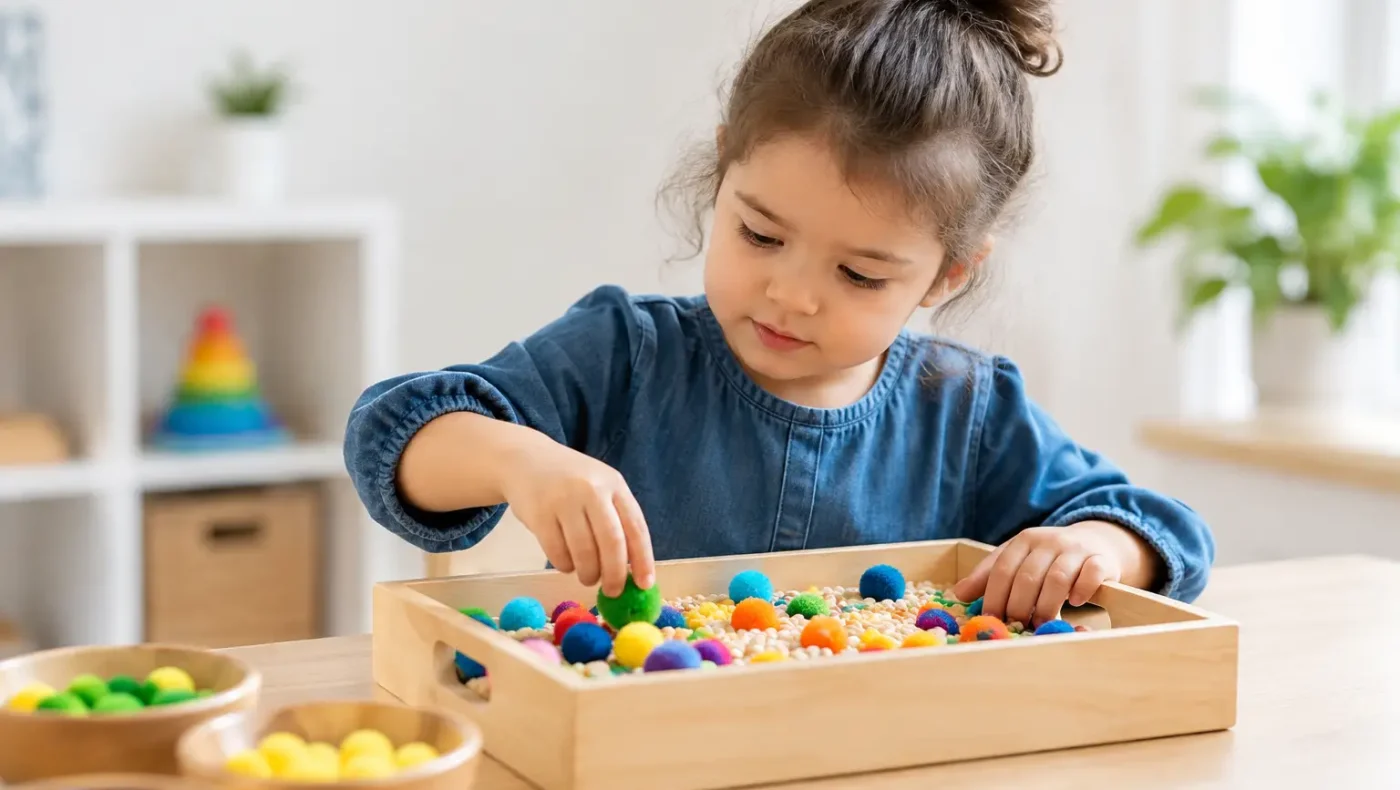
A preschooler tracing letters in rice, sorting buttons by texture, or clapping out syllables may look as though they are simply playing. Yet these moments ask the brain to notice, remember, compare, plan and respond. Done with clear purpose, sensory learning for preschoolers can turn curiosity into the early executive skills that make classroom learning feel more manageable.
For parents preparing a child for Primary 1, the goal is not to fill every afternoon with worksheets. It is to help them listen for longer, follow instructions, use language precisely and recover when a task feels difficult. Sensory experiences can support those outcomes because young children learn most effectively when their hands, eyes, ears and bodies are involved.
What sensory learning really develops
Sensory learning is often described as learning through the five senses. That is true, but it does not tell the whole story. Purposeful activities also draw on proprioception – the body’s awareness of movement and pressure – and balance. These systems help children sit steadily, coordinate their movements and regulate their energy well enough to participate in a lesson.
The value is not in the sensory material itself. A tray of sand does not automatically build literacy, and messy play alone is not a learning plan. The progress comes from the thinking built around the experience: listening to a direction, finding a pattern, describing a change, remembering a sequence or trying a new strategy.
This matters because preschool learning is the foundation for later academic habits. Before a child can confidently write a sentence, they need hand control, sound awareness and enough working memory to hold an idea in mind. Before they can solve a word problem, they need to compare quantities, understand positional language and stay with a task when the answer is not immediate.
Why sensory learning for preschoolers supports school readiness
At preschool age, attention is still developing. A child may understand a concept but lose track of it when it is presented only through speech or print. Giving the brain more than one route into learning can make the idea clearer and easier to recall.
Consider early maths. Counting toy animals while moving each one into a container helps a child connect a number word to a real quantity. Building a repeating pattern with blocks asks them to observe, predict and correct themselves. Pouring water between differently shaped cups begins a useful conversation about volume, even when the child is not yet ready for formal measurement.
The same principle applies to language. Forming a letter with clay lets children feel its shape before they are expected to control a pencil. Tapping the sounds in a word supports phonological awareness. Retelling a story with picture cards or small figures strengthens vocabulary, sequencing and verbal confidence.
These are not shortcuts around academic learning. They are developmentally appropriate bridges towards it. When a child has physically experienced a concept, they are often better placed to recognise it later in a book, on a worksheet or in a teacher’s explanation.
The executive skills behind the activity
Parents understandably look for signs of literacy and numeracy growth. It is equally useful to notice the learning behaviours taking shape beneath the surface.
A simple treasure hunt, for example, can strengthen working memory when a child must remember two clues. It develops attention when they search carefully rather than rush. It also builds cognitive flexibility when a clue leads somewhere unexpected and they need to change course.
A sensory activity can support several executive skills at once:
- Focus and inhibition: waiting for a turn, listening before acting and filtering out distractions.
- Working memory: remembering a pattern, a set of instructions or the next step in a routine.
- Planning and organisation: choosing materials, completing a sequence and putting items away.
- Emotional regulation: coping with uncertainty, frustration or a result that differs from what they expected.
These skills are closely linked to future learning independence. A child who can pause, listen and persist will get more from a phonics lesson or maths activity than one who has memorised isolated facts but cannot sustain attention.
Choose activities with a learning purpose
The best home activities are usually simple, repeatable and short. Parents do not need elaborate equipment or a constant supply of craft materials. What makes the experience effective is a specific goal and an adult who knows when to guide, when to observe and when to step back.
For early literacy
Use a shallow tray of rice, salt or flour for children to draw lines, curves and letter shapes with one finger. Begin with strokes rather than rushing to the alphabet: vertical lines, horizontal lines, circles and zigzags all prepare the hand for writing. Name the movement as the child makes it, such as “down, across, around”, to connect action with language.
For sound awareness, place a few familiar objects in a bag and ask your child to find something beginning with a chosen sound. Keep the task playful and focused on hearing the sound, not guessing a letter name. If the child says a word that does not fit, respond warmly: “That starts with a different sound. Let’s listen together.”
For early maths
Offer small objects to sort by one clear attribute first, such as colour, size or texture. Once that is comfortable, introduce a more demanding instruction: “Can you find all the smooth, blue counters?” This develops classification, listening and mental flexibility.
Pattern-making is another high-value activity. Start a sequence with two colours or shapes, then pause. Ask, “What do you notice?” before asking, “What comes next?” The first question encourages reasoning; the second checks whether the child can apply it.
For focus and self-regulation
Movement is often more useful than insisting that a young child sit still for too long. A short obstacle course with crawling, balancing, stepping and carrying can provide the body input some children need before a table-based task. Follow it with a calm activity, such as matching cards or a simple puzzle, so the child practises shifting from active energy to focused attention.
Sensory bottles, play dough or slow breathing with a soft toy resting on the tummy can also help a child settle. These are not discipline tools to use only after a meltdown. Used regularly, they teach children to recognise what a calmer body feels like.
Avoid turning play into pressure
Sensory learning works best when challenge is carefully matched to the child. If a task is too easy, attention drifts. If it is too difficult, the child may avoid it, become upset or rely on an adult to take over. The right level often looks like a child needing a little support, then succeeding independently on the next attempt.
It also depends on the child. Some children enjoy tactile materials; others dislike sticky, wet or unfamiliar textures. Forcing participation can undermine trust and create unnecessary resistance. Offer alternatives: a brush instead of finger paint, dry beans instead of slime, or tongs instead of hands. The educational goal may stay the same while the route changes.
Avoid overstimulation too. More colours, sounds and materials do not necessarily mean more learning. A busy environment can make it harder for a child to focus on the one concept you want them to understand. Set out only what is needed, use one instruction at a time and allow enough quiet for the child to think.
Turn everyday routines into brain-building moments
The most sustainable sensory learning often happens in ordinary family life. While cooking, a child can compare rough and smooth ingredients, notice smells and count spoonfuls. During a walk, they can listen for different sounds, describe the feel of leaves or follow directions such as “stand beside the bench”. At tidy-up time, they can sort objects, match lids and remember where materials belong.
The language adults use is what extends the learning. Instead of asking only “What colour is this?”, try “How do these two feel different?” or “What could we try next?” Give the child time to answer. A short pause may feel long, but it is where processing and confidence grow.
At ILLAC, sensory and play-based experiences are most powerful when they are paired with intentional instruction. Children benefit from joyful engagement, but they also need skilled guidance that progressively builds attention, memory, reasoning and academic readiness.
A preschooler does not need to perform like an older child to be well prepared for school. They need repeated chances to explore, think, communicate and try again. When learning engages both the senses and the mind, confidence has a stronger place to grow.