
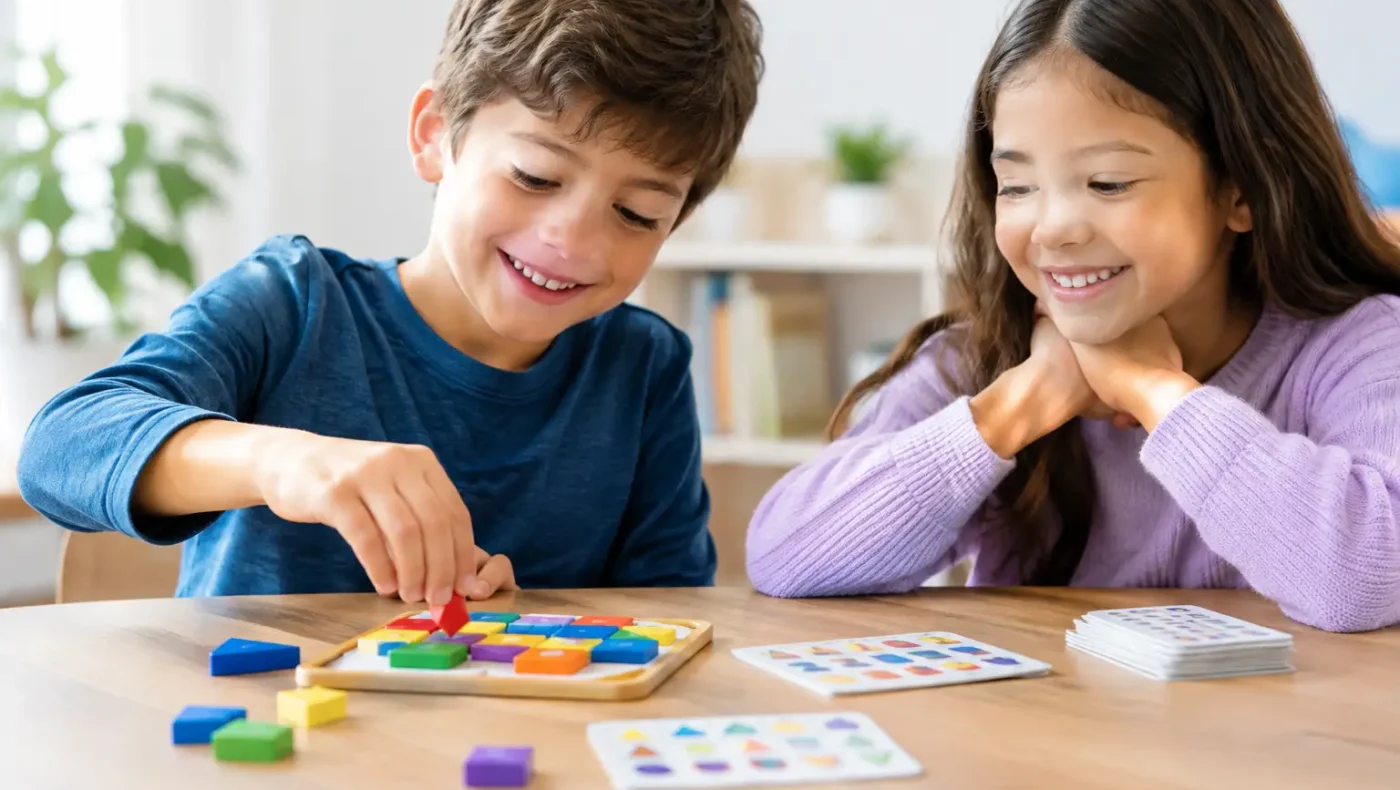
A child who can recite every planet but cannot begin a five-minute worksheet is not being lazy. They may be struggling with the mental skills that organise attention, hold instructions in mind and manage frustration. The top executive function games children enjoy can practise these skills in a way that feels purposeful rather than pressurised.
Executive function is often described as the brain’s management system. It helps a child pause before reacting, remember what comes next, shift strategies when a task becomes difficult and see work through to completion. These abilities matter in the classroom, but they also shape homework routines, friendships, revision habits and confidence.
For parents, the goal is not to fill every evening with another activity. The best games are short, repeatable and just challenging enough to make a child think. A game cannot replace good teaching, sleep, movement or a supportive routine. It can, however, give children valuable practice in the thinking habits that make learning less stressful.
Why executive function games support learning
A child uses working memory when they listen to a teacher’s three-step instruction and begin without repeatedly asking, “What do I do now?” They use inhibitory control when they wait for their turn, check an answer instead of blurting it out, or resist opening a distracting app during revision. Cognitive flexibility helps them cope when a Maths method does not work the first time.
These skills develop gradually. Preschoolers may need help remembering one or two instructions, while older children are learning to plan projects, prioritise revision and recover after a disappointing test result. That is why the right game depends on age, temperament and the skill being practised.
Games work well because they create immediate feedback. When a child forgets the rule, rushes a move or loses track of a pattern, the result is clear without a lecture. With calm adult guidance, they can reset, reflect and try a better strategy.
Top executive function games for children at home
1. Simon Says for listening and self-control
Simon Says remains one of the most effective games for younger children because the rule is simple but demanding: only follow the instruction when it begins with “Simon says”. A child must listen closely, hold the rule in working memory and stop an automatic response.
Begin slowly with actions such as clap, touch your nose and stand up. For children who find it easy, increase the pace or give two-part directions: “Simon says touch your shoulders, then turn around.” Let your child take the leader’s role too. Giving instructions develops planning and language, while following them builds attention control.
2. Memory matching with a strategy twist
A standard card-matching game strengthens visual working memory, but its real value increases when you ask about strategy. Before turning over cards, encourage your child to scan the layout. After each turn, ask, “Where did you see the other tiger?” or “What will you try to remember next time?”
Avoid supplying every answer. The learning lies in helping children notice patterns and make a plan. For preschool children, use fewer pairs and clear picture cards. Primary-age children can use word pairs, times tables or vocabulary categories, turning a familiar game into light academic practice without making it feel like another worksheet.
3. Freeze Dance for impulse control
Play music and invite your child to dance, then pause it without warning. Everyone must freeze until the music starts again. It sounds simple, yet stopping a movement at once requires inhibition – the same underlying skill children use when they pause to read a question carefully before answering.
Add variations to keep the challenge alive. Children might freeze in a shape that matches a category, such as an animal, a letter or an emotion. Older children can switch rules: freeze when the music plays, move when it stops. Rule-switching is particularly useful for practising flexible thinking.
4. Odd One Out for flexible thinking
Place four objects or pictures in front of your child and ask which one does not belong. A spoon, fork, plate and banana might seem straightforward, but the discussion is where the thinking happens. The banana is the odd one out because it is food; the plate could also be different because it is not cutlery.
There may be more than one reasonable answer. Encourage your child to explain their reasoning, then offer a different perspective. This teaches an important lesson for school and life: changing your mind after hearing new evidence is a strength, not a failure.
5. Red Light, Green Light for regulation
In this movement game, children move on “green light” and stop on “red light”. Introduce “yellow light” for slow movement once the basic rule is secure. It is ideal for children who learn best through their bodies or who struggle to stay seated for long stretches.
The game also offers parents a useful observation point. Does your child move before listening to the whole instruction? Do they become upset after making an error? Keep the tone light, but notice these patterns. They can guide the kind of support a child may need during homework or lessons.
6. Story Chain for working memory and language
Start a story with one sentence: “On Monday, a small robot found a blue key.” Your child adds the next sentence, but must first repeat what has already happened. Continue for five to ten turns, depending on age.
Story Chain requires children to retain details, organise ideas and adapt when the plot takes an unexpected turn. It is especially valuable for children who can speak confidently but lose track when writing longer compositions. For older learners, set a challenge such as including three vocabulary words, a problem and a sensible ending.
7. Rush Hour-style logic puzzles and grid challenges
Logic puzzles that require a child to move pieces, follow constraints and reach a goal develop planning, sequencing and persistence. The important part is not speed. It is learning to pause before moving, predict a consequence and revise a plan after a mistake.
If your child immediately asks for help, resist solving the puzzle for them. Try prompts such as, “What is blocking the path?” or “Which move gives you more space?” These questions build independent problem-solving. For a child who becomes discouraged, choose an easier level first and celebrate thoughtful effort, not just completion.
8. The Planning Game for real-life organisation
Not every executive function game needs a board or cards. Ask your child to plan a small event: a family picnic, a birthday breakfast or a Saturday outing. Give them a budget, a time limit and a few constraints, such as rainy weather or one family member’s food preference.
They will need to prioritise, sequence tasks and consider other people’s needs. Primary and secondary students can write a checklist, estimate costs or create a timetable. This bridges play with the planning demands of school, where children must increasingly manage homework, CCAs and revision independently.
How to make games build skills, not pressure
The most common mistake is turning a game into a test. If every round ends with correction, a child who already worries about getting things wrong may disengage. Keep sessions brief – even ten focused minutes can be more valuable than forty distracted ones – and choose a level where success is possible but not guaranteed.
Name the skill quietly and specifically. Instead of saying, “You need to focus,” try, “You remembered the rule even when the game got faster.” Instead of, “Don’t give up,” say, “You changed your plan after that move did not work.” Specific feedback helps children recognise what effective learning looks like.
It also helps to repeat games over several weeks. Executive function improves through practice, not novelty alone. Once a child knows a game well, make one small change: add a rule, reduce cues or ask them to explain their strategy. The challenge should grow with the child, not suddenly overwhelm them.
When games are not enough
Games are a useful window into how a child thinks, but they are not a diagnosis or a quick fix. If your child regularly cannot begin work without extensive prompting, forgets instructions despite repeated support, melts down over small changes or experiences significant school-related anxiety, speak with their teacher or an appropriate professional.
For many families, the difficulty is not ability but a gap between what a child knows and how independently they can use that knowledge. At ILLAC, executive function practice is integrated with academic learning so children can apply focus, memory and planning directly to reading, Maths, Science and study routines.
Choose one game this week and play it when everyone is calm. Watch for the moment your child pauses, remembers, adjusts or tries again. Those small moments are where stronger learners begin to grow.