
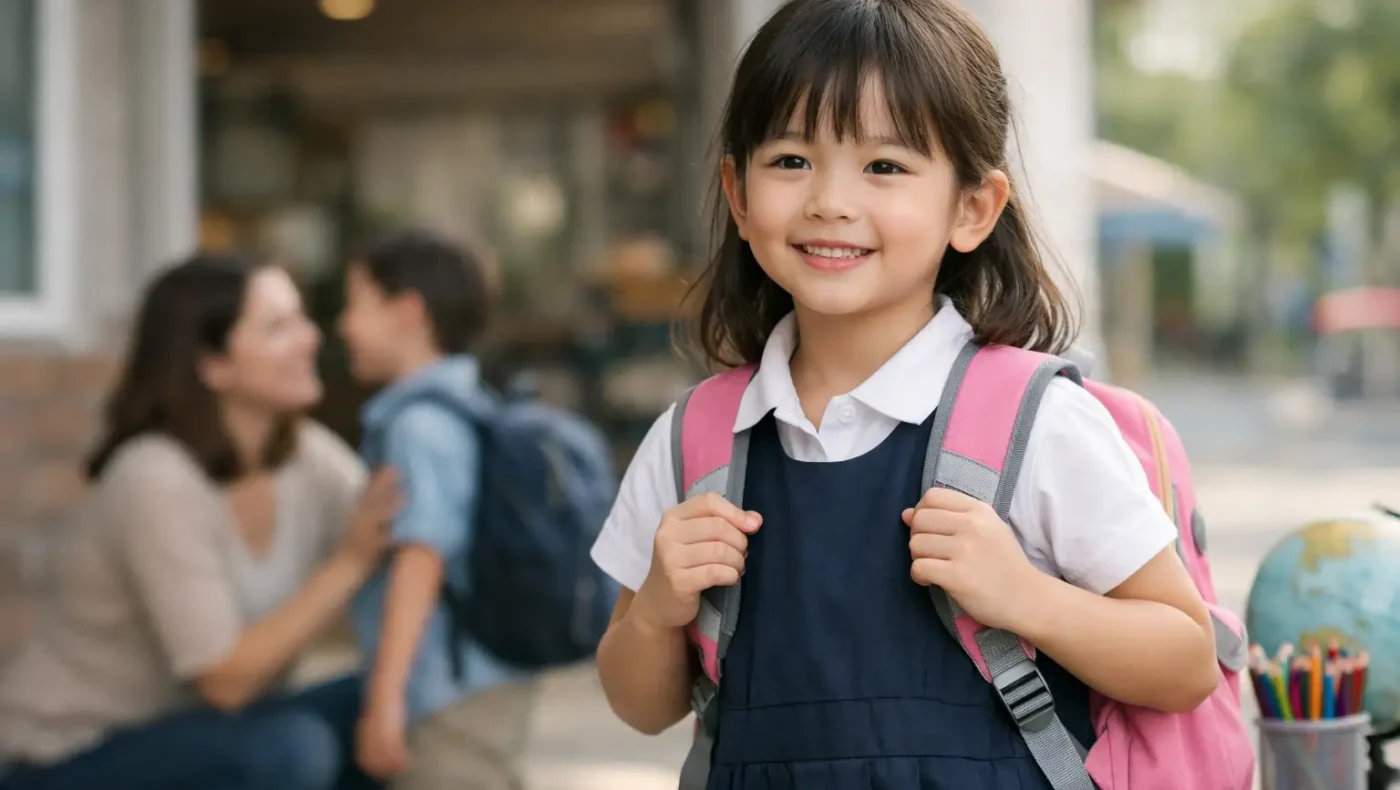
The Primary 1 school bag may be small, but the transition it represents is not. A child who has been comfortable learning through play is suddenly expected to follow routines, listen for longer periods, manage belongings and begin more formal reading, writing and number work. If you are asking, “is my child ready primary 1?”, the most useful answer is not found in a single worksheet or assessment.
Readiness is a combination of academic foundations, emotional security and executive skills. Children do not need to arrive at Primary 1 knowing everything. They do, however, benefit greatly from being able to learn independently, recover from small frustrations and engage confidently with new challenges.
Is my child ready for Primary 1? Look beyond age
Most children begin Primary 1 at around the same age, but they do not develop at the same pace. One child may recognise many words yet struggle to sit through instructions. Another may be sociable and curious but need more support with pencil control or number sense. Both can thrive at school when their next steps are understood and supported.
The question is not whether your child is “ahead”. It is whether they have enough foundational skills to access classroom learning without feeling constantly overwhelmed. This matters because a difficult start can affect confidence. When children repeatedly feel lost, slow or unable to keep up, they may begin to avoid learning before they have had the chance to enjoy it.
A ready child is not necessarily the child who completes the most worksheets. It is the child who can listen, try, think, ask for help and keep going.
1. Your child can understand and follow instructions
In Primary 1, teachers often give instructions to a whole class. Your child may need to listen to two or three steps, such as taking out a book, turning to a page and completing a particular question. They will not receive one-to-one reminders for every task.
Notice how your child responds at home. Can they follow a simple instruction without needing it repeated many times? Can they complete a familiar task after hearing the steps? If not, this is not a reason to panic. Short games can build this skill: ask them to fetch two specific items, follow a sequence while cooking, or listen for a rule during a board game.
The goal is not blind obedience. It is attention, working memory and the ability to act on information.
2. They have early literacy skills, not just memorised words
Primary 1 English involves listening, speaking, reading and writing. A child benefits from being able to recognise letters, hear sounds in words and understand that print carries meaning. They should also be able to speak in simple, complete sentences about an experience, a picture or a story.
Reading a familiar book from memory can look impressive, but it does not always show whether a child can decode unfamiliar words or understand what they have read. Try pausing during story time to ask gentle questions: “Why do you think she did that?” or “What might happen next?” Their answer reveals much more than speed alone.
Writing readiness matters too. Your child need not produce perfect handwriting, but they should be developing a comfortable pencil grip, control of basic lines and shapes, and the stamina to write for a short period. If writing causes tears or immediate fatigue, practise through drawing, tracing, cutting, colouring and playful fine-motor activities before increasing formal writing demands.
3. They understand basic number sense
Being ready for Primary 1 Mathematics is more than reciting numbers to 100. Children need a practical sense of quantity. They should be learning to count objects accurately, recognise common numerals, compare groups and understand simple ideas such as more, less, before and after.
Look for understanding in everyday moments. Can your child share six grapes between two people? Do they know which of two plates has fewer biscuits? Can they explain how they got an answer, even if it is not fully correct? The ability to reason is more valuable than rushing through sums.
A child who understands that numbers represent real amounts will find later addition, subtraction and problem-solving much less abstract. Building this foundation through games and daily routines is often more effective than drilling pages of calculations.
4. They can cope with small setbacks
Primary school brings many firsts: unfamiliar classmates, new rules, timed tasks and work that may not be easy immediately. Emotional readiness does not mean your child never cries, gets cross or misses you. It means they are beginning to recover with reassurance and use words to communicate what they need.
Consider how your child reacts when a tower falls, a game is lost or a correction is made. Do they stop completely, or can they try again after a moment? Children who are taught that mistakes are part of learning are more likely to persist when schoolwork becomes challenging.
Avoid solving every difficulty too quickly. When a child says, “I can’t do it”, try responding with, “Let’s look at the first step together.” This gives support without removing the opportunity to think. Over time, they learn that struggle is temporary, not a signal that they are incapable.
5. They can manage basic personal routines
A Primary 1 child does not need to be perfectly organised. They should, however, be developing independence with practical tasks such as opening containers, using the toilet, washing hands, packing simple items and looking after their belongings.
These routines reduce cognitive load during the school day. A child who can open their water bottle or find the correct worksheet has more attention available for learning. Small daily responsibilities at home are valuable preparation. Let your child pack a pencil case, choose what belongs in a bag or help set out materials for an activity.
Independence grows when adults allow enough time. The morning may be slower at first, but doing everything for a child can make the first weeks of school harder than necessary.
6. They can focus for a short, growing period
Primary 1 does not require a child to sit motionless for hours. It does require them to attend to a teacher, a book or a task for longer than they may be used to in preschool. Focus is a trainable executive skill, not simply a personality trait.
Start with realistic expectations. A child who can concentrate on a meaningful activity for 10 minutes may be ready to extend that gradually. Choose activities that require attention with a purpose, such as completing a puzzle, listening to a story, building from instructions or sorting objects by rule.
Screens can provide quick stimulation, but they do not always build the sustained attention needed for classroom learning. Balance digital entertainment with hands-on play, conversation, reading and activities where your child must wait, observe and respond.
7. They can interact respectfully with others
School is a social environment as much as an academic one. Your child will need to take turns, share space, join group activities and cope when a friend has a different idea. They do not need to be outgoing. Quiet children can be highly ready for school when they can communicate needs and participate in their own way.
Help your child practise simple social language: asking to join a game, saying “please stop”, requesting help and apologising after an accident. Role-play can make these situations feel less intimidating. It also helps to talk honestly about the fact that not every classmate will become a close friend, and that is perfectly normal.
8. They show curiosity and a willingness to learn
The strongest sign of readiness is often not a measurable academic skill. It is curiosity. Children who ask questions, notice patterns, enjoy stories or want to find out how something works have an important advantage: they see learning as something they can participate in, rather than something done to them.
Protect that curiosity during school preparation. Excessive drilling can sometimes produce short-term compliance while making learning feel heavy. Structured practice has a place, particularly when a child needs support, but it should be matched to their developmental needs and balanced with encouragement.
When your child needs more support before Primary 1
If your child finds it very difficult to communicate, follow simple instructions, hold attention, recognise early literacy concepts or cope with separation, an earlier conversation with their preschool educator can be helpful. Support is most effective when it is specific. Rather than saying a child is “not ready”, identify the skill that needs strengthening and create a manageable plan.
For some children, targeted preparation can make a meaningful difference. A well-designed programme should not merely push harder academic content. It should develop the learning behaviours beneath performance: focus, memory, listening, reasoning, confidence and self-management. At ILLAC, this combination of academic instruction and executive function training helps children build the foundations to approach Primary 1 with greater assurance.
Your child does not need to begin Primary 1 as the best reader, the fastest writer or the quickest at sums. Give them the reassurance that they can learn, the routines that help them cope and the chance to practise independently. That is the preparation that stays with them long after the first school bell rings.