Preschool Enrichment Programmes: Developing Executive Functions and Academic Success

The formative years of early childhood education play an essential role in shaping your child’s cognitive, social, and emotional development, laying the groundwork for their future success in and beyond the classroom. At our tuition centre, we are passionate about providing enriching, innovative preschool programmes that empower children to learn faster and better. Our specialised courses focus on enhancing the executive functions of our students, enabling them to sharpen their cognitive abilities, improve memory, and foster adaptability.

In this article, we will explore the significance of early childhood education and highlight the unique qualities of our preschool enrichment programmes, which are specifically created to support the development of critical executive functions in young learners. Furthermore, we will delve into our kindergarten programmes, phonics classes, and maths courses designed to offer a stimulating, diversified learning experience for your child.

Embark on an enlightening journey with us, as we unveil the benefits of our preschool enrichment programmes, share how they can spark your child’s creativity and academic curiosity, and demonstrate how executive function development is the key to unlocking your child’s learning potential. Let us inspire your child’s passion for learning, paving the way for a lifetime of success through our nurturing, comprehensive early learning programmes.

1. The Significance of Early Childhood Education and Executive Function Development

A solid foundation in early childhood education develops lifelong learning skills. Let’s examine the importance of fostering executive functions in preschoolers and how it contributes to their overall development:

a. Academic success: Developing executive functions, including organisation, memory, and adaptability, early on enhances young learners’ ability to grasp new concepts and excel academically.

b. Enhanced learning skills: Focusing on executive functions during early childhood education enables children to learn faster and more effectively, setting the stage for future academic achievements.

c. Emotional and social growth: Preschoolers with developed executive functions demonstrate increased emotional intelligence and social skills, crucial for successful futures.

d. Problem-solving abilities: Children with strong executive functions possess better critical thinking and problem-solving skills.

2. Our Unique Preschool Enrichment Programmes: A Guided Exploration

Our preschool enrichment programme offer specialised, tailored courses designed to enhance learning and develop crucial executive functions in young children:

a. provides a solid academic and social foundation for little learners, catering to their unique abilities and needs.

b. is designed to help students master reading and writing skills in an enjoyable and interactive environment.

c. equips young learners with essential maths skills, fostering a strong foundation for lifelong numeracy proficiency.

d. targets the sharpening of executive functions and cognitive capabilities, promoting enhanced learning abilities and adaptability.

3. Teaching Methodologies and Strategies Employed in Our Preschool Programmes

Our passionate and experienced tutors employ a diverse range of teaching strategies to create an enriching learning experience for preschoolers:

a. Customised learning plans: We develop personalised lesson plans to meet the individual requirements and abilities of each child, ensuring optimal progress and academic achievement.

b. Multi-sensory teaching methods: Our tutors utilise visual, auditory, and kinesthetic means to cater to every child’s unique learning preferences and create a stimulating learning environment.

c. Interactive and hands-on activities: Our courses incorporate playful and interactive activities, encouraging curiosity and exploration, while fostering essential executive functions.

d. Constant feedback and assessment: Our tutors diligently monitor and assess each child’s progress, providing valuable feedback and adapting lesson plans to cater to their evolving needs.

4. The Role of Parents in Supporting Preschool Enrichment and Executive Function Development

Parents play a crucial role in reinforcing learning and nurturing executive functions in their young children. Here are some practical ways to offer support:

a. Consistency and routine: Establish consistent daily routines and activities that encourage children to develop executive functions through organisation and time management.

b. Family engagement: Foster an environment where learning, exploration, and curiosity are stimulated by actively engaging with your child and participating in educational activities together.

c. Age-appropriate challenges: Provide your child with opportunities to practise problem-solving and critical thinking skills through age-appropriate challenges and puzzles.

d. Encourage self-regulation: Teach your child strategies to manage their emotions and behaviour by modelling self-regulation techniques and praising their efforts when they successfully apply them.

Empowering Your Child through Comprehensive Preschool Enrichment Programme

Preschool enrichment and the development of executive functions are vital to unlock your child’s academic potential and ensure their future success. Our cutting-edge early learning programmes offer young learners the opportunity to build a strong foundation in key areas, while enhancing their executive functions for improved learning outcomes. By partnering with us, we will work together to inspire a passion for learning in your child and empower them with the cognitive tools needed to attain success in their ongoing educational journey.

Embrace the opportunity to give your child a head start in life through ILLAC’s nurturing, comprehensive preschool enrichment programmes. Get in touch with us today!

Navigating the Maze of Secondary School Rankings in Singapore: A Guide

Singapore is known globally for its top-notch education system and emphasis on student achievement. With numerous secondary schools providing a rigorous curriculum and a myriad of academic and extracurricular opportunities, it can be challenging for parents and students to decide which school is the right fit. Secondary school rankings play an important role in this decision-making process, as they offer valuable insights into the performance of various institutions across the nation. This article aims to dive deep into the relevance of secondary school rankings, the factors that contribute to these rankings, and how ILLAC supports your child’s academic journey as they navigate through secondary education.

ILLAC is a prestigious tuition centre in Singapore, offering a stress-free and enjoyable learning environment for children aged 2-16. With courses in English, maths, science, and reading, we strive to help students enhance their academic performance and fulfil their potential.

1. The Relevance of Secondary School Rankings

Secondary school rankings offer parents and students a comprehensive overview of the academic performance and opportunities provided by various institutions in Singapore. While these rankings should not be the sole determinant factor when choosing a secondary school, they do serve as a crucial reference point, offering valuable information that can aid in making informed decisions.

It is important to remember that each child’s learning needs and preferences are unique; what may be a highly ranked school for one student may not necessarily be the best fit for another. Secondary school rankings should be considered in conjunction with other factors, like teaching methodologies, school culture, and extracurricular opportunities, to ensure that the chosen school aligns with a child’s overall development.

2. Factors Contributing to Secondary School Rankings

Secondary school rankings in Singapore are often shaped by various factors that contribute to the overall success and reputation of a particular institution. Some of the key factors are:

a. Academic Performance: This includes average PSLE scores, O-Level results, and achievements in national examinations like the A-Level.

b. Direct School Admission (DSA): Many secondary schools offer DSA, which allows students to gain admission based on their talents and achievements in specific areas like sports, arts, or leadership.

c. Co-Curricular Activities (CCAs): A school’s CCAs and extracurricular programmes play a vital role in shaping a child’s holistic development and can impact school rankings, as they reflect the diverse opportunities available to students.

d. Value-Added Measures: The Ministry of Education (MOE) employs value-added measures to assess how much a school has contributed to the academic progress of their students, regardless of their initial entrance scores.

e. Alumni and Affiliations: A school with a strong alumni network and prestigious affiliations often adds to its reputation and ranking.

3. ILLAC’s Role in Supporting Your Child’s Academic Journey

As your child navigates through the secondary school landscape, it is essential to ensure that they receive tailored support and guidance in their academic pursuits. ILLAC strives to complement your child’s secondary education, offering structured and engaging courses in English, maths, science, and reading.

Our approach at ILLAC includes:

a. Personalised Learning: Understanding that every child’s academic needs are unique, we provide personalised learning experiences that cater to their individual pace, interests, and strengths.

b. Experienced Tutors: Our dedicated team of well-qualified educators strive to impart knowledge, skills, and passion for learning to our students.

c. Comprehensive Support: As students navigate through the Singapore secondary school system, ILLAC provides academic guidance and support beyond the classroom, ensuring an enriching and enjoyable learning journey.

Conclusion

While secondary school rankings offer valuable insights into academic performance and institutional reputation in Singapore, they should not be the only consideration when determining the best school for your child. Factors like individual learning needs, teaching methodologies, and extracurricular activities should also play a significant part in the selection process.

At ILLAC, we pride ourselves on providing a supportive and enjoyable learning environment that complements your child’s secondary education through our enrichment classes in Singapore. As your child transitions through the secondary school landscape, you can trust ILLAC to provide tailored academic support, empowering them to achieve their full potential and excel in their educational journey.

Achievement Levels: A Comprehensive Guide to PSLE Scoring

The Primary School Leaving Examination (PSLE) is a crucial assessment in Singapore. It serves as a benchmark for students to assess their academic strengths and weaknesses and identify areas requiring improvement. The PSLE is graded based on the Achievement Level (AL) system, which is a measure of how well a student performs in each subject. This article aims to provide a comprehensive guide to the PSLE scoring system and the different Achievement Levels.

Understanding the Achievement Levels

The Achievement Levels (ALs) are scoring bands that range from AL1 to AL8, with AL1 being the highest and AL8 being the lowest. Each AL represents a particular range of scores that a student can achieve in a subject. 

The AL scores are based on the student’s raw score. For example, a student who scores between 90 and 100 in a subject will achieve AL1, while a student who scores between 20 and 34 will achieve AL8. 

Scoring System and Calculation

The PSLE scoring system is based on the total aggregate score, which is the sum of the ALs achieved for each of the four subjects. The highest possible PSLE score is 4, and the lowest is 32. 

Interpreting the Achievement Levels

The Achievement Levels provide a measure of how well a student has performed in each subject. AL1 to AL3 are considered high levels of achievement, while AL4 to AL6 are considered average. AL7 to AL8 are considered low levels of achievement. 

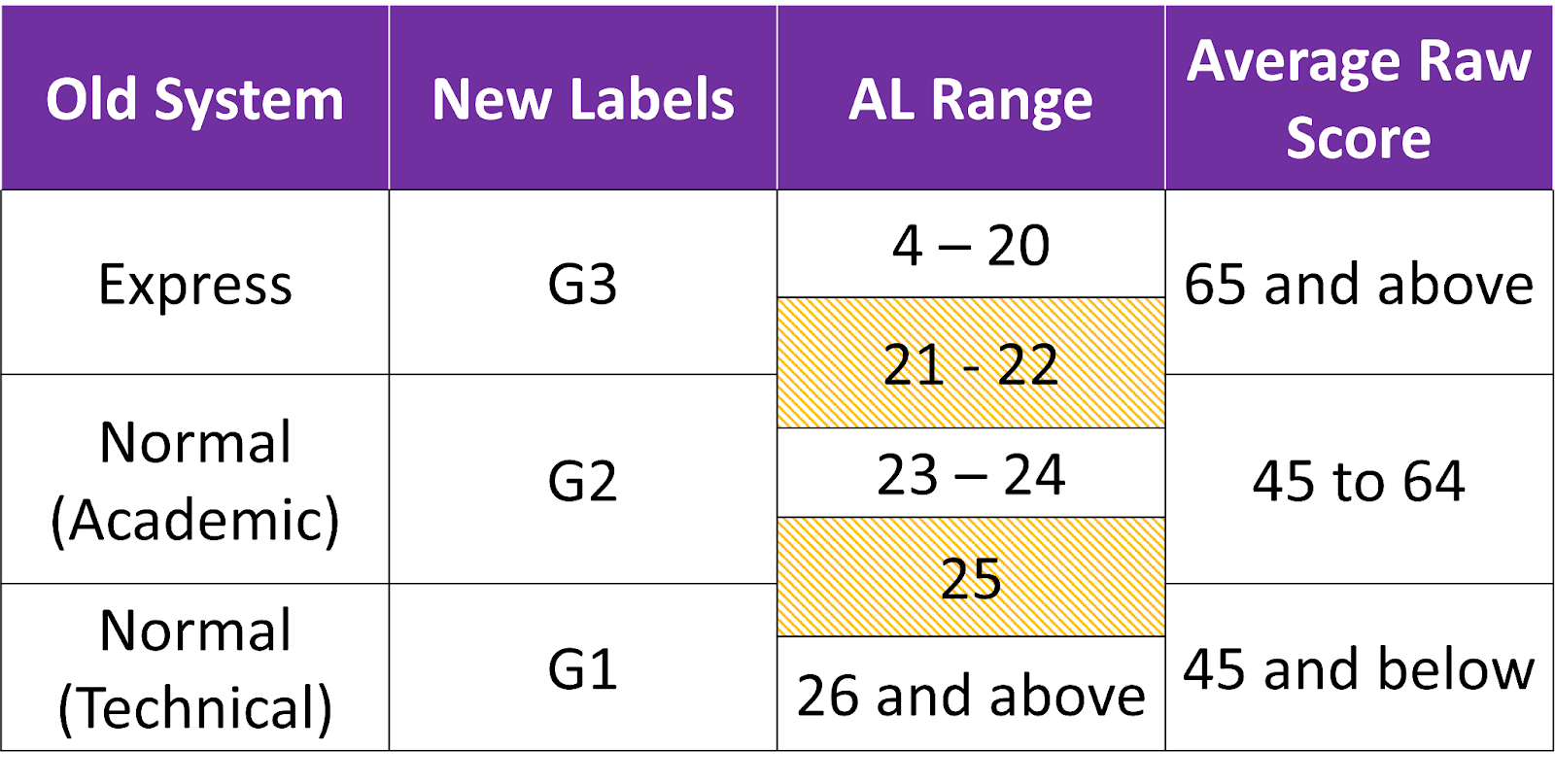
Secondary schools use the ALs to determine the suitability of students for different academic streams. They accept students based on their total PSLE score and place them into G1, G2, or G3 classes. This is not a fixed level, students are able to take subjects at a more difficult level despite the academic stream they are allocated to.

Strategies for Achieving High Achievement Levels

To achieve high Achievement Levels in the PSLE, students need to understand the subject matter and develop strong study habits deeply. Students should aim to master the fundamental concepts in each subject, as well as the application of these concepts to different scenarios. Regular practice and revision are also crucial for PSLE preparation. Students should identify their areas of weakness and work on improving them through extra practice and consultation with their teachers. In addition, students should develop effective time-management skills to ensure that they can complete the examination within the allocated time. 

Conclusion

The Achievement Levels are an essential part of the PSLE scoring system in Singapore. They provide a measure of how well a student has performed in each subject relative to his or her peers and are used to determine the suitability of students for different academic streams. 

To achieve high Achievement Levels, students need to deeply understand the subject matter, develop strong study habits, and practice regularly. Parents and teachers should also provide support and guidance to help students achieve their potential. Understanding the PSLE scoring system and the different Achievement Levels is crucial for students and parents to make informed decisions regarding secondary school placement.

If you’re looking for effective PSLE preparation, look no further than ILLAC. Our experienced tutors and comprehensive curriculum will help your child excel on the PSLE and beyond. Contact us today to learn more and start your child’s journey to success.

How to maximise your child’s online learning

Advancements in technology coupled with the pandemic has led to an exponential shift towards online learning. We are increasingly seeing children having Zoom lessons with their teachers and even co-curricular activities being carried out on screen. With more time spent looking at their devices, it is inevitable that children may end up being distracted rather than being focused on their studies.

For you to maximise your child’s online learning, here are tips you can utilise!

1.Set online rules with your child.

Have a talk with your child before online lessons to come up with some rules they can adhere to during their screen time. Have them write it down on paper and even decorate it to leave a positive impression. Afterwards, paste it up somewhere visible.  Some rules can include – “Give your teacher your fullest attention”, “Answer questions”, “Listen to teacher’s instructions” etc. Reward your child with praises and even little stickers when they follow the rules they have created! These rules help sharpen their self-regulation and inhibitory control as well!

2. During lessons, be close by.

Being in the vicinity of your child during their online lessons can help you monitor their progress. You do not necessarily have to be constantly supervising them, frequent check-ins on how they are doing should suffice. During the check-ins, observe if they are paying attention and aptly engage them on what they have learnt by asking them questions related to their lesson. Your looming presence will also encourage your child to stay focused.

3. Ask your child questions after the lesson.

Building on the second point, you can also have your child tell you about what they had learnt during their lesson. Add onto it as well with your own knowledge whenever possible to encourage mental flexibility! Displaying a positive interest in your child’s learning will motivate them to wow you every session, guaranteeing heightened attention during their learning.

4. Check if they have additional work on-line or off-line.

After a lesson, your child’s teacher/instructor may give them work to do. Check if they have any and if they do, encourage your child to finish up their work diligently within a given duration (memory of fresh knowledge tend to slip out of mind without practice after the 3rd day). This trains your child to stick to a fixed routine and develop the beneficial habit of completing their work first before partaking in other recreational activities. This can help your child better retain the information during their lesson as they can apply it immediately to their work while the memory is still fresh (within 3 days!).

It can be tough having to juggle between your child’s learning and other pressing commitments. Knowing that you have done the absolute best for both you and your child is the way to go! Moderation is key, pace yourself and your child to avoid burning out while learning or working from home and stop to refresh and energise when needed.  

Home Practices to Improve Working Memory of Children Ages 3 to 6

With society’s increasingly high standards in education and academics, it is without saying that we are in a relentless rat race to provide the best education for our children. Whilst having enrichment lessons may suffice, why not go the extra mile to practice at home by honing your child’s executive functions.

Executive Functions are mental skills which include Working Memory, Mental Flexibility and Inhibitory Control; which the lack thereof can have detrimental impact on our daily lives and potentially, academic performance. Executive functioning skills develop exponentially in early childhood and into adolescence, therefore it is paramount to prime our young ones early.

To start off, let’s focus on Working Memory, where the brain is engaged to hold multiple information at the same time while simultaneously processing it (Miller, 1960). An active stimulation of working memory helps reduce irrelevant information that interferes with the task at hand (Brogaard, 2020) which will be extremely helpful when your child enters Primary School.

Here are some simple home practices you and your child can do to improve Working Memory:

  1. Games

Memory games such as Spot the Differences can be fun and interactive ways for your child to improve their working memory. Show your child 2 similar looking images side by side and have them describe the differences they saw. Amp up the difficulty level by showing them just one picture for a few seconds, reintroduce both pictures and then have them describe the one they saw.

Why not get creative as well with different items in the house, by removing or swapping items around, ask your child if they see anything out of place.

Another game would be Card Matching! Use any deck of cards you have on hand such as Uno or Old Maid that has pairs of identical cards. Flip them around and have a mini competition with your child to see who can match up all the cards first! For an even greater challenge, have them place the cards back at their original positions after the game ends.

  • Apply Memorisation Tactics

Such tactics can come in the form of active reading, visualisation, and making connections.

  1. When reading, encourage your child to read out loud and ask questions related to the material to prolong the retention of information.
  2. Prompt your child to create images of what they have read or seen in their head so that they have a mental picture which they can refer to.
  3. Help your child make fun connections to better remember information. This can be done through the use of Mnemonics (e.g., Abbreviating the Colours of the Rainbow into a made-up name Roy. G. Biv) or associating a tune to the spelling of a complex word.
  • Chores

Yes, you heard me right. Chores are fantastic ways to improve working memory. Do keep in mind that working memory is not just about cognitively solving arithmetical problems, it is also evident in whether one is able to bake a cake without forgetting the steps.

Have your child build up the good habit of writing down what they can do to help at home and guide them in organising this information into smaller pieces. Simpler exercises can include giving them instructions on which of their toys go into the box first and have them pack it in the correct arrangement. You can also have them assist you with preparing meals by reciting the quantity of ingredients without constantly referring to the recipe.

Simple multi-sensory methods like these go a long way and you are also building up a sense of responsibility in them!

At the end of the day, do observe your child and understand what appeals to them and keeps them willing to do more. Every child has their own pace when learning thus as adults, we should provide them with the adequate tools to do so. The list of at-home practices is inexhaustive, like and follow us for many more such recommendations for you.

GEP or Not?

Congratulations! Now that your child has been selected for the GEP program, what’s next for him/her?

It might be an extremely straightforward answer for some parents but not so for some others. My opinion is, go for it. Reasons being:

PROS:

  1. It’s a great confidence-booster.
    • Your gifted child knows what “gifted” means and there is no better way to inform your child that he/she is really good at what he/she has been doing than being identified as the top 1% of the cohort in Singapore. A generally high self-confidence can lead to higher competency in everything else that the child attempts and an even stronger love for learning.
  2. It’s a label that will follow your child for life (in a good way)
    • We are always cautious about having labels put on our children but this is one label you want stuck to your child. With the label of being the top 1% of the cohort, your child can potentially find him/herself in more favourable situations in his/her adult-life, starting with the choice of secondary schools such as Anglo-Chinese School, Dunman High School, Hwa Chong Institution, Nanyang Girls’ High School, NUS High School of Mathematics and Science, Raffles Girls’ School (Secondary) and Raffles Institution which offers IP programs for GEP students.
    • (Source: https://www.moe.gov.sg/education/programmes/gifted-education-programme/development-and-growth)
  3. Life is more than English, Mathematics, Science and Mother Tongue!
    • Not only will your child be changing school (if he/she is not already in one of the assigned GEP school), he/she will be experiencing more than the main-stream curriculum has to offer. The GEP program is administered under an enrichment model where the curriculum:
      • extends beyond the basic syllabus in depth and breadth
      • covers more advanced topics whenever necessary
      • caters more to individual needs and interests
      • makes interdisciplinary connections
      • encourages the investigation of real-life problems
      • promotes the examination of affective issues in the various subject areas

(Source: https://www.moe.gov.sg/education/programmes/gifted-education-programme/enrichment-model)

CONS:

  1. GEP students are not necessarily top PSLE students
    • GEP students are very busy. Not only do they attend mainstream lessons and continue mainstream work, they have projects, camps and out-of-the-classroom programs to participate in. Their PSLE results may not show their intelligence since PSLE preparation requires much drills and regurgitation which are not in the interest of GEP students.
  2. Danger of complacency
    • We all know and have heard of children who think they are too smart for their pants and end up failing in life. And yes, these are true/real stories that will happen if left unguided. Some GEP students end up doing really well but unfortunately, some will slide off the grid and end up in mediocre vocations just like any others. The key that parents need to remind themselves is to psychologically support their children in continuous hard work and effort so as to ground them in thoughts of continuous improvement of themselves.

For those parents who think that the GEP program will be extremely beneficial for their children, they are right. The program will bring children beyond what they are capable of and help them reach their peak potential.

However, you are NOT advised to “train” your child for GEP by signing up for GEP-training classes at centers that claim to “create” GEP students because talent, although can be groomed, cannot be “naturalised” into a child. Meaning, if your child is not naturally prepared for the high demands of the GEP program, you will only do more harm than benefits by artificially fitting your child into the GEP program. Think of the stress the child has to go through just to remain in that GEP class you have planted her/him into. If it works out, good for him/her. If it doesn’t, the poor kid suffers the repercussion for life.

Once again, congratulations for being the parent of a gifted child, embrace the learning journey with your child, support her/him throughout the program and remind them of the importance of effort to achieve great success in life.

Why Shouldn’t You Scold Your Child for Their Bad Results

It’s easy to blame your child for the bad results he received.

“Why didn’t you pay attention in class?!”

“You don’t know and you didn’t ask?!”

“What were you doing when the teacher was teaching?!”

These might have been your first thoughts but it’s really unfair for you to blame your child for her bad results simply because:

  1. They didn’t mean it! – No child in the right mind will want to do badly in their examination. It is every human being’s instinct to want to excel in life. They may have been careless in their work or in your opinion, not “interested” in ensuring perfection. However, they are still young. They are like “L” plate drivers who are tentative and tend to make mistakes. Be understanding and forgiving, cut them some slack.


  1. They don’t know what they don’t know. – Languages, Mathematics and Sciences are not topics that you can master just because you “pay attention” in class or “ask” when you don’t understand. We have to remind ourselves that not all teachers are made equal and not all learning environment is the same. Even if you pay 100% attention every time the teacher is teaching, you may not understand or be taught what you need to know in order to deal with the examination questions.

Let me give you a simple example, which of the following is correct?

a) An FBI agent

b) A FBI agent

If your answer is “a”, you are wrong. Because “F” is read as /effe/, which is sounded with an /e/ at the beginning thus you use an “an” in front of it (It’s actually not about the spelling but the sounds of the first syllable.).

If you got it right, good for you, you are one of the lucky ones who had gotten a great English teacher when you were young.

Now try this:

____________ more dustbins in school ___________ in reducing littering?

1) does, help                    3) do, helps

2) do, help                        4) does, helps

The answer is option 1). It is a real examination question picked out from a Primary 6 SA2 examination paper. This kind of question is not something that you will know how to answer without the guidance of a good English teacher and definitely not something that is taught actively in the textbook or even in class. However, they do, somehow, find their way into the test papers.


  1. You will increase their anxiety level. – The only thing that will result from your scolding is their increased stress and anxiety level in dealing with their studies. Stress is defined as “a response that occurs when an individual faces the lack of resources to deal with the situation given”. Screaming at them simply makes them feel inadequate without them feeling like they are receiving the help that they need, this thus results in undue stress, which in turn affects learning.


To help your child, start them young. Be reasonable in your expectations of your child’s results. Right from Primary 1, do not scold them for the bad results. I’ve seen so many children who have tried forging signatures, hiding test papers, crying in school because they didn’t want to go home to their parents with their bad scores. Don’t give your children the undue stress that they are already facing on a daily basis. It’s not their fault to have done badly, they don’t know what they were not taught. Even if they were taught, they are not experts of the topic yet and therefore failure is simply one of the paths they had to walk on in their learning journey.


When you receive your child’s papers, look into it, analyse it, see what the problems are, be understanding and seek help for him/her. That’s only fair for your child.

How to make my child smarter?

id-100412434

Don’t most of us want to know that? The answer is, fortunately, easier than we thought. Apart from good genes, we can make our children smarter by using the appropriate praises.

Research has shown that those who believed that ability is fixed, doesn’t feel that they need to put in effort to score in a test, they believe they will get good scores just because they are born smart. Even when they have gotten answers wrong, they won’t bother to find out what went wrong or how to fix it because that will show their disability in being smart.

Whereas those who believed that ability can be improved, will always want to know what the right answer is and how to get the right answer, so that they can become better. Therefore, they will always put in the effort to learn more and remember more. That’s not all, students who believe they can become smarter, are also more persistent in times of failure because, if you believe you can become better, you will naturally not be beaten by a one-off failure and look forward to correcting your failure.

What we can do as parents to instil the correct mindset towards ability/intelligence, will be to always emphasize on the effort, so your child will develop the mindset that it is effort that did the magic, or that it’s the lack of effort, that made one fail.

Praises that you should use will be like “Good effort!”, “Good persistence!”, “Good patience!” etc.

Never, NEVER, say, “So clever!”, “Smart boy!” etc. without injecting elements of ‘effort’ into the praise. The moment your child feels that he is born with it or he is naturally good, he should not need to put in the effort to improve, and he might never want to try again at the first instance of failure because he might have somehow “lost” the ability to be good.

For example, say “Good use of colours! I like your effort in making the picture so colourful.” Instead of “What a beautiful picture! You can draw really well.”

The difference between the 2 types of praises is that one tells specifically what is good, so the next time the child wants to create another picture, he will put in the effort to use more colours. In a way, you are not just encouraging your child to work hard, you are telling your child what exactly he is doing that is right.

In conclusion, in order to ensure your child becomes smarter, be sure to use the right words when praising. Praise the effort, the determination, the decision-making, the choice of level of difficulty, the improvement, the attitude and so on.  Your child will thus want to learn more, know more, become more persistent in the face of failure and therefore, become smarter.

Image courtesy of jk1991 at FreeDigitalPhotos.net

The struggle between academic achievement and training another Joseph Schooling

I had wanted to write an article about Joseph Schooling and his academic achievement to discuss the balance that one can achieve between studies and sports. However, I can’t seem to find anything about his results in school. Then it struck me… seriously… who cares? Who cares if Joseph Schooling had done well in school when he is now a world champion. However, many parents will want their children to have the back-up plan, in case they don’t achieve their sporting goals… come on, there can’t possibly be too many Joseph Schooling anyway.

Joseph Schooling had, most probably, in my opinion/assumption, done very well in school because academic achievement and athletic performance have been found to go hand-in-hand in many situations.

In a study conducted over 4 years at a highly selective liberal arts college and an Ivy League university, about 1000 student-athletes and non-athletes presented some really positive research results. In that study, it was found that the academic performance of the athletes was not below what would be expected based on their entering profiles. In fact, the athletes were found to surpass non-athletes on sociability/extraversion and self-reported well-being in each annual wave of the study. Athletes were also reportedly not isolated from the rest of the student body; they spent over 50% of their time with non-group members and belonged to non-athletic extracurricular groups every year (Aries, McCarthy, Salovey and Banaji, 2004).

This goes to show that academic achievement and sociability need not necessarily be sacrificed for athletic performance.

Furthermore, in another study that included about 8000 undergraduates from the University of Montana in 1997,it was found that national collegiate athletes displayed a higher level of “hope” when compared to the non-athlete undergraduates (Curry, Snyder & Cook, 1997). Which means, athletes in schools were found to exhibit more goal-directed behaviours with specific plans to reach their goals. They are generally more self-disciplined and determined in reaching their goals both in court/pool and otherwise.

Sadly, we don’t have similar studies done in Singapore. However, one can make reference to the performance of the students in the Singapore Sports School (SSP).

In the news on  5 Jan 2016, it was reported that 13 out of 19 of the school’s first batch of International Baccalaureate (IB) graduates attained at least 40 points out of a maximum of 45. Its cohort of student-athletes achieved a 100 per cent pass rate, slightly higher than the national pass rate of 98 percent (Straits Times, 2016).

Additionally, in SSP’s Review Report for the year 2011,  it was reported that of those who sat for the GCE O-Level Examinations, which constitute about half of each SSP cohort, the distinction rates for many core O-Level subjects are higher than the national averages.

These reports go to show that sporting achievements and academic performances do go hand-in-hand and parents can really put their hearts at ease in allowing their children to further their sporting talent!

However, just a caveat, the dream to achieve must come from the child and not the parent. If the parents are the ones who want their children to pursue a sporting career, the results wouldn’t be ideal…

Play it well! Academic achievement with sporting success is possible!


Contact Us

enquiry@ilovelearning.com.sg
(65) 9711 8963
Jurong East Branch 2 Venture Drive #06-15 Vision Exchange Singapore 608526
Clementi Branch Blk 612 Clementi West St 1 #01-292 Singapore 120612
Woodlands Branch Blk 306 Woodlands St 31 #02-35
Singapore 730306

© 2025 – I Love Learning. All Rights Reserved. Website Design By Advergreen Digital