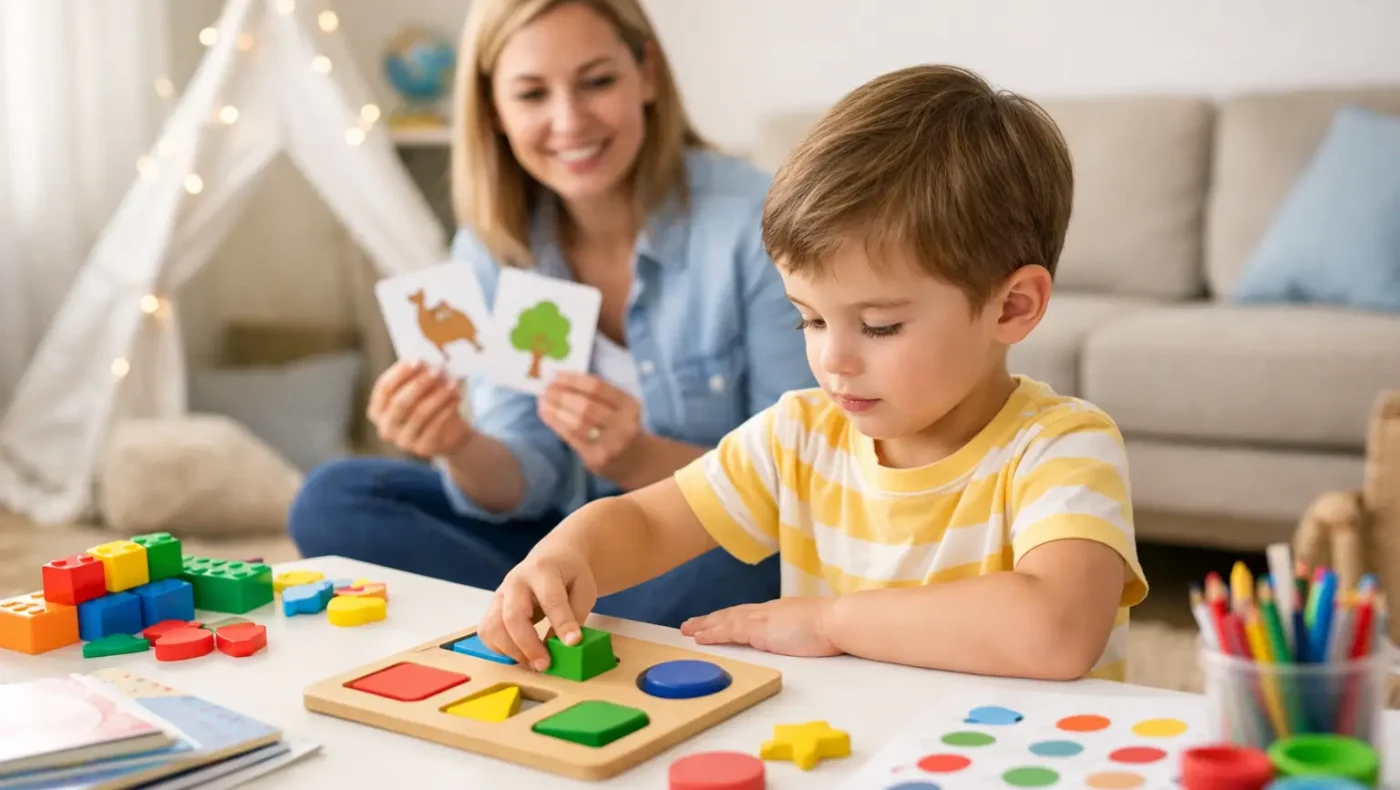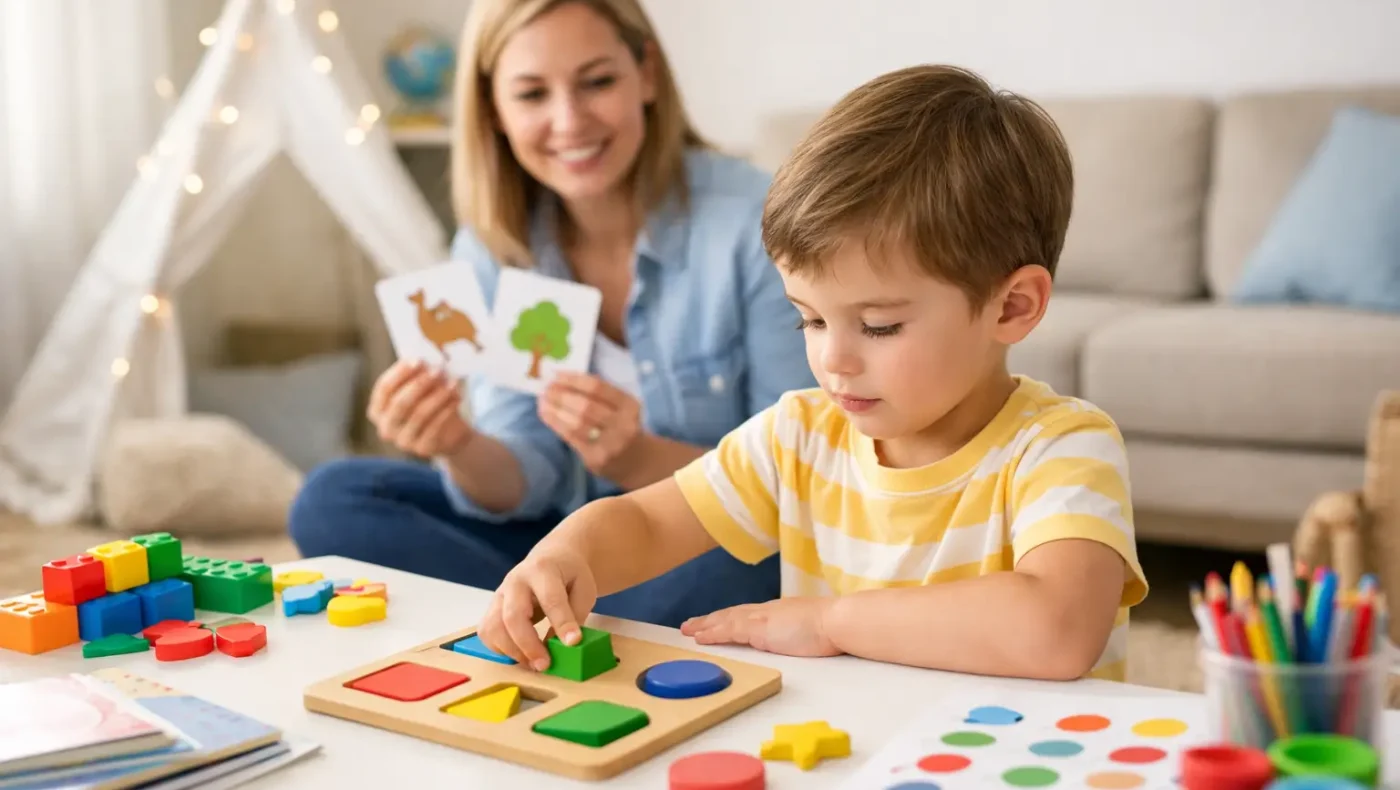
A child who can recite the alphabet but struggles to wait, listen, hold a pencil or recover after a mistake may still find the first weeks of school difficult. The best preschool readiness activities build far more than early academic knowledge. They strengthen attention, language, motor control, independence and the confidence to try when an adult is not immediately beside them.
For parents preparing a child for Primary 1 in Singapore, it is tempting to fill every afternoon with worksheets, flashcards and extra practice. A little structured practice can help, but readiness is not about racing ahead of the curriculum. It is about helping your child arrive at school able to learn, participate and cope with new routines.
What preschool readiness really looks like
A school-ready child does not need to read chapter books or complete long sums. They need a secure foundation in a few connected areas: oral language, early literacy, number sense, fine and gross motor skills, social awareness and executive function.
Executive function may sound advanced for preschoolers, but it appears in very ordinary moments. It is the child remembering a two-step instruction, pausing before grabbing a toy, staying with a task for a few more minutes, and changing plan when something does not work. These skills make classroom learning less stressful because a child can direct their attention and respond to guidance.
The right level of challenge depends on your child. A highly verbal child may need more practice with patience and pencil control, while a child who loves building may benefit from richer conversation and sound awareness. Observe before you accelerate. Progress is most meaningful when your child feels capable, not constantly tested.
10 best preschool readiness activities for confident learners
1. Turn story time into a thinking conversation
Reading aloud is one of the highest-value habits you can create. Choose picture books with a clear sequence, then pause occasionally to ask, “What do you think will happen next?” or “Why do you think she felt that way?”
These questions build vocabulary, listening comprehension and reasoning. Rather than correcting every answer, ask your child to explain their idea. This teaches them that thinking matters, even when the answer changes after hearing more of the story.
2. Play sound detective
Before children can read fluently, they need to hear the individual sounds in words. During car journeys or walks, say a simple word such as “sun” and ask what sound it begins with. Later, stretch out familiar words slowly: “mmmm-a-p”, and let your child blend them together.
Keep this playful and brief. The goal is not to drill phonics terms but to help your child notice that spoken words are made of sounds. This awareness gives formal reading instruction a much stronger starting point.
3. Use everyday routines for number sense
Number readiness is not just counting from one to 100. A child needs to understand what numbers represent. At snack time, ask them to place four crackers on a plate, then ask whether there are more crackers or more strawberries. While setting the table, count spoons and match one spoon to each person.
Talk about more, fewer, equal, bigger, smaller and next. When children touch, move and compare real objects, numbers become meaningful rather than a sequence they have memorised.
4. Set up a simple listening game
In class, children are regularly asked to listen, remember and act. Build this skill with games such as “Simon Says”, musical statues or a home-made instruction challenge. Begin with one instruction: “Clap twice.” When that is easy, try two: “Touch your nose, then sit down.”
Do not increase difficulty too quickly. Success builds concentration, while repeated failure can make a child avoidant. A few minutes of focused play is more useful than a long session that ends in frustration.
5. Strengthen fingers before expecting neat handwriting
Many preschoolers are asked to write before their hands are ready. Fine motor strength develops through varied movement: squeezing play dough, using tongs to sort pom-poms, threading beads, tearing paper for collages and fastening buttons.
Drawing, colouring and tracing can be included, but they should not be the only activities. Stronger hand muscles and better coordination make pencil control more comfortable, which protects confidence when writing becomes a daily school task.
6. Create a five-minute finish-it task
The ability to start, sustain effort and complete a task is a powerful form of school readiness. Choose a short, achievable activity such as finishing a small puzzle, sorting socks, building a block model from a picture or completing a simple matching sheet.
Use a visual timer if it helps, and praise the process specifically: “You kept looking even when that piece did not fit.” Avoid stepping in at the first sign of difficulty. Children need opportunities to experience manageable struggle and discover that they can persist.
7. Practise independence through real responsibilities
Primary 1 brings more transitions, belongings and expectations. At home, let your child pack a small bag for an outing, put dirty clothes in the laundry basket, open food containers and tidy materials after an activity.
These tasks may take longer at first, but they build planning, sequencing and self-belief. Instead of saying, “You are too slow,” try, “What do you need to do first?” A child who can manage small responsibilities is more likely to approach school routines calmly.
8. Build emotional language with role-play
A child may know their letters yet be unsettled by a disagreement, a correction from a teacher or a change in routine. Use dolls, toy figures or pretend play to act out common moments: someone wants the same toy, a tower falls down, or a child feels nervous about joining a game.
Name emotions clearly and practise useful responses. “I feel upset. Can I have a turn after you?” is more helpful than simply telling a child to be nice. Emotional vocabulary gives children a way to seek help and solve small social problems without becoming overwhelmed.
9. Play memory and pattern games
Working memory supports almost every early learning task. It helps a child remember the sounds in a word, follow a teacher’s instruction and keep track of what comes next in a routine. Try clapping a short rhythm for your child to copy, arranging coloured blocks in a pattern, or placing three objects on a tray and removing one while they close their eyes.
Make the game easier or harder according to your child’s response. The point is focused engagement, not catching them out. When games are enjoyable, children are more willing to stretch their attention.
10. Make movement part of learning
Young children often concentrate better after moving. Create an indoor obstacle course with cushions, masking-tape lines and chairs to crawl under. You can add learning naturally: jump to the card showing five dots, find an object that begins with the “s” sound, or follow a route using positional words such as under, behind and beside.
Movement supports balance, body awareness and self-regulation. It also suits children who learn best when they can see, touch and do, rather than sit still for long periods.
How to avoid turning preparation into pressure
A strong home routine does not need to resemble a tuition timetable. Ten to 20 minutes of purposeful activity, woven into play and daily life, is often enough for a preschooler. Reading together every day, having unhurried conversations and giving your child practical responsibilities will achieve more over time than occasional intensive drilling.
Watch for signs that the level is wrong. If your child is repeatedly avoiding an activity, becoming tearful or relying entirely on adult prompts, simplify the task and rebuild success. On the other hand, if they complete it without thinking, add one small challenge. Effective learning sits between boredom and overload.
It also helps to separate effort from identity. Replace “You are so clever” with “You tried a new way” or “You remembered what to do next.” This develops a growth mindset that will serve children well when classroom work becomes more demanding.
When extra support may help
Some children need more targeted guidance, especially if they find it hard to focus, communicate needs, recognise sounds, manage emotions or engage with early number concepts. This does not mean they are incapable. It means their readiness plan should be more personalised.
A quality preschool enrichment programme should develop foundational literacy and numeracy alongside attention, memory, problem-solving and confidence. At ILLAC, this balance matters because early academic gains are most sustainable when children also learn how to listen, think, persist and enjoy the learning process.
Your child does not need to enter Primary 1 already knowing everything. They need to enter believing that they can listen, try, ask, recover and learn. Give them regular chances to practise those habits now, and school will feel less like a leap and more like the next exciting step.