
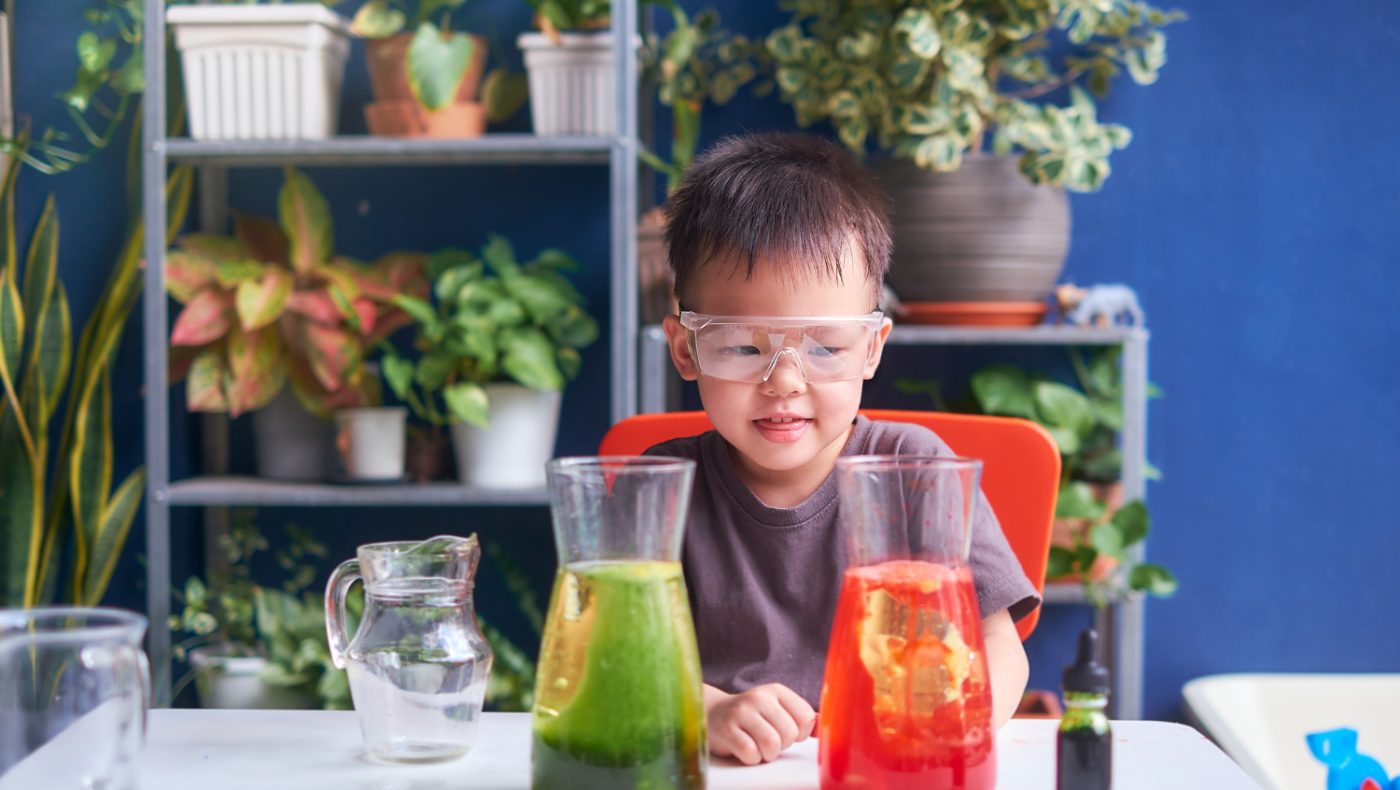
Learning science doesn’t have to be a mundane task confined to textbooks and classrooms. With a little creativity, it’s possible to transform science into a hands-on and engaging experience right in your own home. Reinforcing PSLE Science concepts using simple experiments can make the learning process both fun and educational. This approach not only solidifies the principles students need to know but also sparks curiosity and creativity in young minds.
Home experiments offer children the chance to see science in action. This not only helps them grasp abstract concepts better but also encourages them to explore further on their own. By integrating learning with playful activities, children are more likely to retain information and develop a genuine interest in science. Below, we dive into some straightforward experiments you can try at home, which align perfectly with what your child is learning in PSLE Science.
Simple Home Experiments for PSLE Science
Home-based science experiments are valuable tools for understanding the key concepts required in the PSLE curriculum. They turn abstract ideas into tangible experiences, making the science learning process more immersive and enjoyable. By engaging in these activities, children are more likely to remember and understand complex theories, as they witness the science firsthand.
One major advantage of conducting experiments at home is the ability to control the environment for learning. Parents and children can choose the time, pace, and type of experiment that best suits the child’s learning style. Additionally, these activities allow students to ask questions, make predictions, and draw conclusions, thereby reinforcing critical thinking skills.
Experiment 1: Growing Bean Plants
Watching a seed grow into a plant is nothing short of magical for children. This experiment not only teaches them about life cycles but also about the essentials of plant biology. Here’s what you’ll need:
- Dry beans
- Cotton wool
- A jar
- Water
Steps to Grow Your Bean Plant:
- Line the inside of the jar with cotton wool.
- Place a few beans between the cotton and the jar, so they’re visible from the outside.
- Moisten the cotton wool, ensuring it stays damp.
- Place the jar on a windowsill and observe daily as the beans begin to sprout.
The growing beans help children understand photosynthesis and the life cycle of a plant. As they tend to their beans, they learn about the conditions plants need to thrive, such as sunlight and water. This hands-on experiment not only reinforces science concepts but also nurtures empathy and responsibility.
Experiment 2: DIY Water Filtration
The importance of clean water is a topic that can be effectively taught through home experiments, helping children understand how filtration works. Using basic materials, you can set up a simple water filtration system to demonstrate how impurities are removed. Here’s what you’ll need to get started:
- Sand
- Gravel
- Cotton balls
- A plastic bottle
- Dirty water
Steps to Create a Water Filter:
- Cut off the bottom of the plastic bottle and turn it upside down to use as your filter holder.
- Place cotton balls at the neck of the bottle to act as the first filter layer.
- Add a layer of sand over the cotton balls, followed by a layer of gravel.
- Pour dirty water through your homemade filter and observe as it passes through each layer, becoming cleaner.
This experiment is an excellent way for children to visualise how water filtration systems operate. As water moves through the layers, larger particles get trapped by the gravel, while smaller particles are caught by the sand and cotton layers, resulting in clearer water. This practical demonstration highlights the essential processes of filtration and purification, linking theory to real-world practice and making learning more engaging.
Encouraging Curiosity and Learning at Home
Creating a science-friendly environment at home encourages children to learn and explore beyond the classroom. Parents can support this curiosity by providing resources and setting aside time for playful learning. It’s about creating a space where inquisitive questions are welcomed and explored thoroughly.
- Keep materials like magnifying glasses, science kits, or even simple household items available for spontaneous experiments.
- Schedule regular family “science nights” to experiment together.
- Encourage children to document their findings in a notebook, helping them develop skills in observation and record-keeping.
- Celebrate curiosity by finding answers to questions together, whether through books or the internet.
Promoting a learning culture at home helps children view science as a fun and accessible subject. It nurtures independent thinking and problem-solving abilities, encouraging them to ask more questions and seek solutions on their own.
Making Science Fun and Accessible
Home experiments are a fantastic way to reinforce PSLE Science concepts, making science both relatable and exciting. With minimal effort and materials, families can explore a wide array of topics together. It introduces science in an approachable way, ensuring it doesn’t feel like another homework chore.
When children are encouraged to engage with science in a playful manner, it fosters both understanding and an appreciation for how these concepts apply in everyday life. Exploring together not only strengthens family bonds but also instils a lifelong love for science. By turning what could be a dry study session into an interactive experience, children develop a natural curiosity and the confidence to explore the world around them.
Explore the exciting world of science at home and make learning interactive and fun. Enhance your child’s scientific curiosity and understanding with engaging activities that build on their school knowledge. For a more structured approach, ILLAC offers excellent opportunities for science enrichment in Singapore. Discover how our programmes can further support your child’s journey in science by visiting our primary science course offerings.